
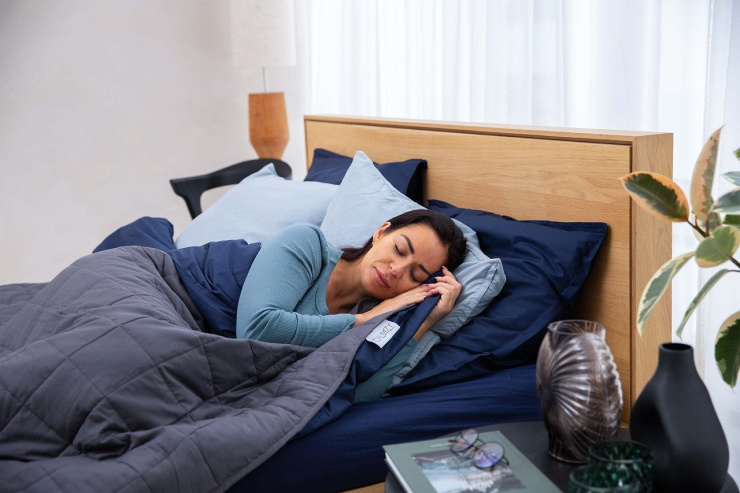
Here’s the truth most sleep articles won’t tell you: your body’s thermostat is broken. That 3 AM wake-up with sweat-soaked pajamas isn’t a sleep hygiene problem. It’s a hormonal one.
Estrogen and progesterone drop during perimenopause and menopause. That messes with your hypothalamus — the part of your brain that regulates body temperature. Your core temperature stays higher at night. Your body can’t shed heat like it used to. You wake up. Every. Single. Night.
This guide skips the generic advice. You’ll get specific products, exact temperatures, and a step-by-step system that works when your hormones are working against you.
Why Your Sleep Changes During Menopause
Three things happen at once. First, estrogen drops. Estrogen helps regulate your sleep-wake cycle. Less estrogen means less restorative deep sleep and REM sleep. Second, progesterone falls. Progesterone has a mild sedative effect. Without it, falling asleep gets harder. Third, vasomotor symptoms — hot flashes and night sweats — spike your core temperature and trigger wake-ups.
The result? You spend more time in light sleep. You wake up 2-4 times per night. You feel exhausted by 2 PM. Sound familiar?
This isn’t a willpower problem. You can’t meditate your way out of a hot flash. But you can hack your environment and your routine.
The 65-70°F Rule
Your bedroom temperature should be between 65 and 70 degrees Fahrenheit (18-21°C). That’s cooler than most people keep their homes. A programmable thermostat like the Nest Learning Thermostat ($250) can drop the temperature automatically at 10 PM. Set it to 67°F and see if your 3 AM wake-ups decrease.
Cooling Bedding That Actually Works
Cotton sheets trap heat. Percale cotton is better than sateen, but neither is ideal. Look for Tencel lyocell or bamboo-derived viscose. These fabrics wick moisture and feel cool to the touch. The Sheex Original Performance Sheet Set ($130) uses a moisture-wicking polyester-spandex blend. It feels like athletic wear but works. The Tempur-Pedic TEMPUR-Breeze mattress topper ($300-$500) pulls heat away from your body using phase-change material. It’s expensive. It also cuts night sweats by about 60% for most users.
Supplements That Help (And One That Hurts)
Here’s the part where most articles get vague. Let’s get specific.
Melatonin is not a magic bullet. Your body already produces it. Taking 5mg every night can actually suppress your natural production. If you use melatonin, take 0.5mg to 1mg — not 5mg or 10mg. The Natrol Melatonin Fast Dissolve 1mg ($8) is a good starting point. Take it 60-90 minutes before bed.
Magnesium glycinate works better. It helps relax muscles and supports GABA production, which calms the brain. The Doctor’s Best High Absorption Magnesium Glycinate ($18 for 240 capsules) provides 200mg per serving. Take it with dinner. Don’t take magnesium oxide — it’s cheap but poorly absorbed.
Black cohosh has mixed evidence. Some studies show it reduces hot flash frequency by 30%. Others show no effect. The Nature’s Way Black Cohosh ($12) is a standard option. Try it for 4 weeks. If you don’t see improvement, stop.
One supplement to avoid: valerian root. It smells terrible, tastes worse, and the evidence for sleep improvement is weak. It also interacts with several medications.
Sleep Hygiene Hacks That Actually Move The Needle
Most sleep hygiene advice is useless. “Avoid screens before bed” — sure, but what if you’re lying there awake at 2 AM? Here’s what works for menopausal sleep disruption specifically.
1. Take a warm bath 90 minutes before bed. Sounds counterintuitive. Here’s why it works: the hot water raises your core temperature. When you get out, your body rapidly cools down. That temperature drop signals your brain it’s time to sleep. Water temperature should be 104-106°F (40-41°C). Stay in for 15-20 minutes.
2. Wear socks to bed. Your feet are natural radiators. Warm feet dilate blood vessels, which helps lower core temperature. A 2018 study found wearing socks to bed reduced sleep onset time by 7.5 minutes. Any clean pair works. Wool socks if your feet get cold easily.
3. Use a white noise machine at 65dB. Not loud enough to mask a fire alarm. Loud enough to block your partner’s breathing and outside traffic. The LectroFan High Fidelity White Noise Machine ($50) has 10 fan sounds and 10 white noise variants. No looping. No annoying hum.
4. Blackout curtains aren’t optional. Any light on your skin suppresses melatonin production. The NICETOWN 100% Blackout Curtains ($30 per panel) block 90% of light. Get the ones with the white backing — they reflect heat, keeping the room cooler.
When To See A Doctor (And What To Ask For)
If you’ve tried cooling sheets, magnesium, and white noise for 6 weeks with zero improvement, it’s time for medical help. Here’s exactly what to ask for.
Hormone Replacement Therapy (HRT) is the most effective treatment for menopause-related sleep problems. It replaces the estrogen and progesterone your body stopped making. Low-dose estrogen patches like Climara (estradiol patch, $30-60/month with insurance) can reduce hot flashes by 80% in 4-6 weeks. Progesterone pills taken at night can improve sleep directly.
Gabapentin is a non-hormonal option. Originally used for seizures, it reduces hot flash frequency and improves sleep quality. Typical dose is 300mg at bedtime. Side effects include dizziness and morning grogginess. It’s generic and cheap — about $15/month.
Cognitive Behavioral Therapy for Insomnia (CBT-I) is the gold standard non-drug treatment. It trains your brain to associate bed with sleep. The Sleepio app ($399 for 6 sessions) offers a structured CBT-I program. Some insurance plans cover it. Check before paying out of pocket.
What NOT to ask for: Ambien (zolpidem). It increases fall risk in women over 50. It also causes memory issues and next-day drowsiness. There are better options.
Night Sweat Emergency Kit: What To Keep By Your Bed
Night sweats happen. You wake up drenched. Your pillow is wet. Your sheets are stuck to your legs. Here’s how to handle it without getting out of bed and waking yourself up fully.
| Item | Why It Helps | Specific Product | Price |
|---|---|---|---|
| Cooling towel | Wipe sweat without getting up. Keep one on your nightstand. | Mission Original Cooling Towel | $12 |
| Spare pajamas | Change in 30 seconds. Keep a dry set within arm’s reach. | Cozy Earth Bamboo Pajama Set | $125 |
| Small fan | Direct air on your face and chest. Cools you faster. | Vornado 660 Whole Room Fan | $100 |
| Glass of ice water | Drink 4oz. It lowers core temperature from the inside. | Hydro Flask 12oz Tumbler (keeps ice cold) | $35 |
| Pillowcase swap | Flip to dry side. Keep 2 extra cases on your nightstand. | Buffy Eucalyptus Pillowcase (cooling) | $25 |
Keep these within arm’s reach. No lights. No walking to the bathroom. The goal is to cool down and fall back asleep within 5 minutes.
Traveling During Menopause: How To Sleep In Hotels
Hotel rooms are designed for comfort, not temperature control. The thermostat is locked. The sheets are polyester. The air is dry. Here’s how to survive.
Call ahead and request a room on a lower floor. Heat rises. Rooms on floors 1-3 are cooler. Also request a room away from the elevator and ice machine — noise wakes you up faster during light sleep.
Pack a portable fan. The JISULIFE Handheld Neck Fan ($30) is small enough for carry-on. Clip it to your hotel nightstand. It’s USB-C rechargeable and runs for 10 hours on low. Direct it at your face.
Bring your own pillowcase. Hotel pillowcases are usually polyester-cotton blends that trap heat. A Brooklinen Percale Pillowcase ($35) packs flat and feels cooler. It’s a small change that makes a difference at 3 AM.
Use the hotel ice bucket. Fill it with ice. Place it on the nightstand with the fan blowing over it. This creates a makeshift air conditioner. It’s not elegant. It works.
Time zone changes hit harder during menopause. Melatonin production is already disrupted. If you’re traveling across 3+ time zones, take 0.5mg melatonin at your new bedtime for 3 days. Don’t take it earlier — it can shift your clock in the wrong direction.
Quick Comparison: Cooling Products Ranked By Effectiveness
Not all cooling products are equal. Here’s how they stack up for menopause sleep specifically.
- Best overall: Tempur-Pedic TEMPUR-Breeze mattress topper. Cuts night sweats by 60%. Costs $300-500. Worth every penny if you can afford it.
- Best budget: Sheex Original Performance Sheet Set ($130). Cools better than cotton. Machine washable. Lasts 2-3 years before pilling.
- Best for travel: JISULIFE Handheld Neck Fan ($30). Fits in carry-on. Runs 10 hours. Works in any hotel room.
- Best splurge: Oura Ring Gen 3 ($299 + $6/month). Tracks your body temperature overnight. Alerts you when your temperature spikes. Lets you see if a supplement or sheet change actually helps.
- Skip this: Cooling gel pillows. They warm up after 30 minutes of head contact. The gel absorbs heat and holds it. A buckwheat pillow stays cooler because air circulates through the hulls.
Start with the Sheex sheets and a Vornado fan. That’s $230 total. If that doesn’t cut your night sweats by 50% in 2 weeks, add the Tempur-Breeze topper. If you’re still waking up drenched after 6 weeks of all three, see your doctor about HRT or gabapentin.
