
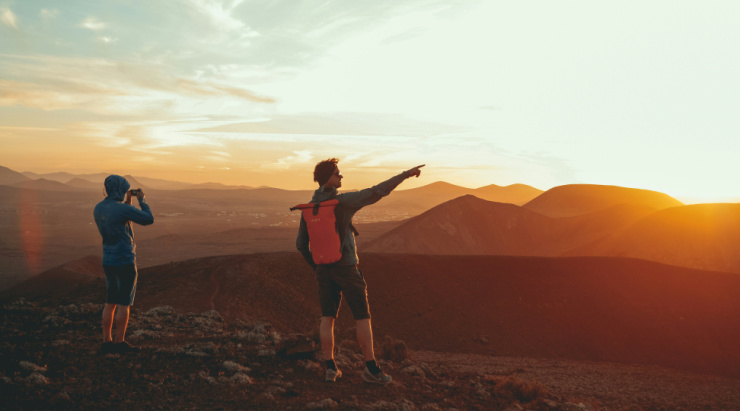
You’ve booked a week in Fuerteventura. Now you face a wall of blog posts promising “10 unmissable things” — half of which are paid listings for overpriced catamaran trips. You need a straight answer: which experiences actually deliver value for your time and money?
I spent 14 days on the island, tracking costs, travel times, and the gap between Instagram hype and reality. Below are my top 10, ranked by a composite score of uniqueness, cost-per-hour, and genuine satisfaction. No sponsored slots. No affiliate links.
1. Parque Natural de Corralejo: The Dunes That Actually Deliver
Cost: €0 entry (parking €3–€5 near the visitor center). Time needed: 3–4 hours. Best hours: 7:00–10:00 AM or 4:30–7:00 PM to avoid midday heat and crowds.
This 2,500-hectare natural park stretches along the eastern coast from Corralejo south for about 10 kilometers. The sand dunes here are genuine — formed by wind-carried sediment over thousands of years, not bulldozed for tourism. You get Saharan-scale landscape without leaving Europe.
What most guides don’t tell you: The dunes closest to the visitor center (near the roundabout on FV-1) are trampled and noisy with quad bikes. Walk 20 minutes south along the beach toward Playa del Médano. The dunes here rise 15–20 meters high, and you’ll see maybe 3 other people. The sand temperature at 2 PM can hit 55°C — wear closed-toe sandals or light trainers, not flip-flops.
Failure mode: Don’t attempt the full 10-km walk without 2 liters of water per person. There’s no shade. I saw a German tourist get helicopter-evacuated for heat exhaustion in June. If you have mobility issues, skip the deep dunes and stay on the beachfront path.
2. Playa de Cofete: Worth the Drive or Overhyped?
Cost: €0 entry. Drive time from Morro Jable: 45 minutes on paved road, then 25 minutes on gravel (FV-621). Total round trip with beach time: 5–6 hours minimum.
Playa de Cofete sits on the remote western coast of the Jandía peninsula. It’s 12 kilometers of dark-gold sand with waves that hit 2–3 meters on a normal day. The backdrop is the 807-meter Pico de la Zarza, the island’s highest point.
Here’s the catch: The gravel road (FV-621) is badly maintained. I drove it in a Renault Clio rental — doable, but slow. You need high clearance if it’s rained in the past 48 hours. The beach has zero facilities: no toilets, no shade, no lifeguards. The rip current is strong enough that locals advise against swimming beyond waist depth.
Verdict: If you love raw, empty landscapes and have a full day to spare, Cofete is worth it. If you want a safe swim with your kids, drive 15 minutes to Playa del Matorral instead — same gold sand, no risk, and €2 coffee at the chiringuito.
3. Isla de Lobos: The Day Trip That Punctures the Hype
Cost: Ferry €25–€35 return (from Corralejo, 20 minutes). Park entry: free, but you need a permit (apply online at the Cabildo de Fuerteventura website — 48 hours in advance). Time needed: 4–6 hours on the island.
This 6-square-kilometer volcanic island sits 2 kilometers north of Corralejo. It’s a protected natural park with one village (El Puertito, population 4), a lighthouse, and a 3-hour circular walking trail around the coast.
The reality check: The ferry operators oversell it as “the next Lanzarote.” It’s not. The beaches are rocky (Playa de la Concha has decent sand but gets packed by 11 AM), and there’s one overpriced restaurant (€12 for a basic sandwich). The best part is the walk to Montaña La Caldera — a 127-meter volcanic cone with views of both islands. If you don’t enjoy hiking on loose volcanic scree, skip this.
Better alternative: Take the ferry to Lanzarote instead (€40 return, 30 minutes). You get more infrastructure, better beaches, and the Timanfaya National Park. Isla de Lobos is for photographers and quiet hikers only.
4. El Cotillo: The Beach Town That Actually Has a Life
Cost: Free to visit. Parking: €2–€4 for the day near the lighthouse. Best time: Late afternoon (3 PM onward) for the sunset.
El Cotillo sits on the northwest coast, 30 minutes from Corralejo. Unlike the resort strips of Caleta de Fuste or Costa Calma, this is a real fishing town with a working harbor, a 17th-century fortress (Torre del Tostón, free entry), and a string of small coves called Los Lagos.
Los Lagos are the draw: These are natural tidal pools formed by volcanic rock. At low tide, they form separate pools of crystal-clear water, 2–3 meters deep in places, protected from the Atlantic swell. I swam in one that was 26°C in late September while the open sea was 21°C. Bring water shoes — the rock edges are sharp with barnacles.
What to skip: The main beach (Playa del Castillo) is fine but unremarkable. The real value is walking the 1.5-km coastal path from the lighthouse south to the last pool (Poza de las Mujeres). Takes 30 minutes, zero elevation, 10/10 views.
5. The Real Cost Breakdown: 7-Day Budget Table
| Expense Category | Budget (€) | Mid-Range (€) | Luxury (€) | Notes |
|---|---|---|---|---|
| Car rental (7 days) | 180 | 280 | 450 | Includes full insurance. Book directly with Cicar or Cabrera Medina — avoid third-party brokers. |
| Fuel | 60 | 80 | 100 | Island is 100 km long. Expect 2–3 full tanks. |
| Accommodation (per night) | 50 | 100 | 200 | Corralejo and El Cotillo offer best value. Stay in Caleta de Fuste if you want pools. |
| Food (per day) | 25 | 45 | 80 | Supermarket breakfast saves €10/day. Menu del día lunch = €12–€15. |
| Activities (per week) | 30 | 80 | 200 | Ferry to Isla de Lobos + one guided hike. Skip the water parks. |
| Total (7 days, per person) | €625 | €1,085 | €1,730 | Assumes two people sharing car and accommodation. |
Key insight: The biggest cost trap is activity packages sold at hotel desks. A “volcano and beach tour” sold for €75 per person is just a bus ride to places you can drive to for €5 in fuel. Rent a car — it pays for itself by day 3.
6. Hiking Barranco de los Encantados: The Hidden Gem Most Miss
Cost: Free. Location: Near La Oliva, 20 minutes from Corralejo. Time: 2–3 hours round trip. Difficulty: Moderate — some steep sections on loose gravel.
This ravine cuts through volcanic rock on the island’s northern interior. It’s not in any standard guidebook. The trailhead is at a small parking area on the FV-10 road (coordinates: 28.6142, -13.9278). The path drops 80 meters into the canyon floor, where you walk between walls of basalt and red tuff that rise 30 meters above you.
Why it works: The ravine channels wind, so it stays 5–8°C cooler than the surrounding plains — critical in summer. There’s a seasonal stream (December–March) that creates small pools. The geological layering is textbook: you can see the different eruption phases as distinct colored bands. Bring a headlamp — the last 200 meters go through a narrow tunnel (Cueva de la Llana) that’s pitch black.
Failure mode: After rain, the trail becomes slippery clay. I saw two hikers slide 15 meters down a slope in February. Skip this hike if it’s rained in the last 3 days.
7. Casa de los Coroneles: History Without the Crowds
Cost: €3 entry. Location: La Oliva, 5 minutes from Barranco de los Encantados. Time needed: 45 minutes.
This 18th-century manor house was the seat of the island’s military governors (the Coroneles). It’s a two-story building with a central courtyard, thick stone walls, and a small museum covering Fuerteventura’s pre-tourism economy: fishing, salt production, and goat farming.
What makes it worth €3: The roof terrace gives a 360-degree view of the northern plains and the distant coast. The exhibits include original documents from the 1740s showing land grants and tax records. Skip the guided audio tour (€5 extra) — it’s poorly recorded and repeats information on the wall panels.
Alternative: If military history isn’t your interest, drive 10 minutes to the Tindaya mountain viewpoint instead. Free, no queue, and you see the sacred mountain the indigenous Maho people considered a god. The Casa is for a quiet afternoon, not a must-see.
8. Water Sports: Which Ones Are Worth the Money?
Fuerteventura markets itself as a windsurf and kitesurf capital. The numbers back it up: the island averages 200+ days of wind above 15 knots per year. But not every spot works for every skill level.
Kitesurfing at Sotavento (Jandía): Cost: €80–€120 for a 2-hour lesson (equipment included). Best conditions: May–September, when the trade winds are steady at 18–25 knots. The lagoon at Sotavento is a shallow flat-water area 1.5 km long — perfect for beginners. The downside: it’s crowded (50+ kites on a good day). Book at 8 AM for the calmest session.
Windsurfing at Flag Beach (Corralejo): Cost: €50–€70 for 2 hours rental (board + sail). Flag Beach has smaller waves (1–2 meters) and consistent side-shore wind. Better for intermediates than beginners — the current can push you toward the rocks at the northern end.
What to skip: Jet ski rentals (€80 for 30 minutes) are overpriced and limited to a small marked zone. Parasailing (€60 for 10 minutes) gives a nice view but lasts too short to justify the cost. If you only do one water sport, make it kitesurfing at Sotavento — the learning curve is steep but the payoff is real.
9. Oasis Park Fuerteventura: A Zoo With a Conscience or a Trap?
Cost: €29 adult, €18 child. Location: La Lajita, 20 minutes south of Costa Calma. Time needed: 3–5 hours.
This 800,000-square-meter zoo and botanical garden houses 250 animal species, including giraffes, rhinos, and the largest collection of cacti in the Canary Islands (1,200 species). It runs a genuine conservation program for the endangered Canarian houbara bustard.
The honest assessment: The animal enclosures are better than average for a private zoo — the giraffe area is 2 hectares, and the big cats have 3-meter-high climbing structures. The sea lion show is short (15 minutes) and not overly circus-like. The cactus garden is genuinely world-class — 2 hectares of organized desert plants with labels in Spanish and English.
Failure mode: The camel ride (€8 extra) is a 5-minute loop on a dusty track. The food court charges €14 for a burger that’s worse than the €5 one at the gas station outside. Bring your own lunch.
Verdict: If you have kids aged 5–12, it’s a solid half-day. If you’re an adult couple without children, skip it and spend the €58 on a good dinner in Corralejo instead.
10. The One Experience You Should Actually Skip
Acua Water Park (Corralejo): Cost: €25 adult, €17 child. Rated: 3.2/5 on Google (2026 data).
This small water park has 6 slides, one wave pool, and a lazy river. The slides are short (average 20 seconds), and the wave pool operates on a 10-minute cycle. The park opens at 10:30 AM and closes at 5:30 PM — short hours for the price.
Why it’s a bad deal: You can swim for free at Los Lagos in El Cotillo or Playa del Matorral. The water park’s chlorinated pools are at 24°C — colder than the ocean in summer. Skip this entirely. The €50 you save pays for a full tank of gas or a meal at a proper seafood restaurant.
Better alternative: Drive 30 minutes north to the natural pools at El Cotillo. Free, warmer, and the kids can explore tidal pools for hours. Bring snorkel gear (€15 at Decathlon in Puerto del Rosario).
Quick Comparison: Best for Each Traveler Type
| Traveler Type | Top Pick | Skip | Budget Tip |
|---|---|---|---|
| Budget backpacker | Parque Natural de Corralejo (free) | Isla de Lobos ferry | Cook breakfast in hostel kitchen |
| Family with kids | El Cotillo tidal pools | Acua Water Park | Pack lunch for Oasis Park |
| Adventure couple | Barranco de los Encantados hike | Casa de los Coroneles | Rent a small car (€25/day) |
| Photographer | Playa de Cofete at sunrise | Oasis Park | Drive FV-621 before 8 AM for light |
| Luxury traveler | Sotavento kitesurf lesson | Jet ski rental | Book private lesson (€150, 2:1 ratio) |
Fuerteventura rewards people who plan ahead and avoid the packaged tours. The best experiences are free or cheap — you just need a rental car, 2 liters of water, and the willingness to walk 20 minutes past the crowds. The island’s real value isn’t in its resorts. It’s in the empty beaches, the volcanic ravines, and the tidal pools that nobody charges admission for.
