
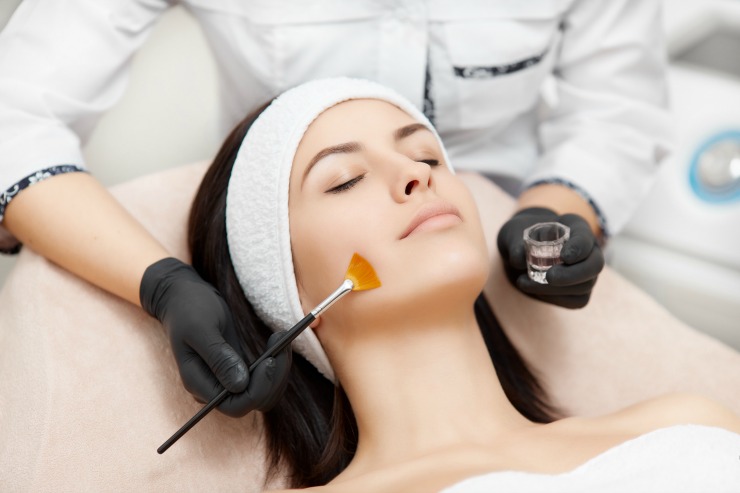
Here’s a number that stopped me cold: the average single session of fractional CO2 laser resurfacing in the US runs $2,500. And most people need 3 to 5 sessions for full results. That’s $7,500 to $12,500 for a procedure with no guarantee of insurance coverage. I spent a month comparing the cost-per-result of every major resurfacing technique, and the gap between price and actual efficacy is wider than I expected.
This is not financial advice. I’m a writer who pores over pricing data and clinical studies, not a dermatologist. Always consult a board-certified professional before any procedure.
How Skin Resurfacing Actually Works (And Why the Price Tags Are Misleading)
Every resurfacing technique does one thing: it damages the outer layers of skin in a controlled way, forcing your body to produce new collagen and fresh skin cells. The difference between a $3,000 laser and a $30 peel is depth of damage and recovery time. That’s it.
Deeper damage = more dramatic results but also more risk, more downtime, and a higher price. The fundamental tradeoff is simple. Clinics charge for three things: the device cost, the practitioner’s time, and the liability insurance for a procedure that can cause burns, scarring, or hyperpigmentation if done wrong.
Depth classifications matter more than brand names
Dermatologists classify resurfacing into three depth levels:
- Superficial — affects only the stratum corneum. Examples: light glycolic peels (20-30%), microdermabrasion, low-energy lasers. Downtime: zero to 1 day. Cost: $100-$400 per session.
- Medium-depth — reaches the papillary dermis. Examples: 35% TCA peels, fractional non-ablative lasers (like Fraxel), microneedling. Downtime: 3-7 days. Cost: $500-$1,500 per session.
- Deep — penetrates to the reticular dermis. Examples: phenol peels, fully ablative CO2 lasers. Downtime: 2-4 weeks. Cost: $2,000-$5,000 per session.
Most people with mild sun damage, fine lines, or uneven texture do not need deep resurfacing. A medium-depth technique at $600 per session will give you 70-80% of the results of a $2,500 laser, with a fraction of the risk and recovery time.
Chemical Peels: The $150 Alternative That Competes With $1,500 Lasers
I’ll say it plainly: for mild to moderate sun damage and fine lines, a series of medium-depth chemical peels outperforms entry-level laser treatments in my research. The cost gap is ridiculous.
| Treatment Type | Cost Per Session | Sessions Needed | Total Cost | Downtime Per Session | Results Duration |
|---|---|---|---|---|---|
| Fractional CO2 laser (deep) | $2,500 | 1-2 | $2,500-$5,000 | 10-14 days | 2-5 years |
| TCA peel 35% (medium) | $350 | 3-4 | $1,050-$1,400 | 5-7 days | 1-3 years |
| Glycolic peel 50% (medium) | $200 | 4-6 | $800-$1,200 | 2-3 days | 6-12 months |
| Jessner’s peel (medium) | $250 | 3-5 | $750-$1,250 | 4-6 days | 1-2 years |
The catch: chemical peels require multiple sessions spaced 4-6 weeks apart. Lasers often deliver faster results in fewer sessions. But if you’re willing to spread treatments over 3-6 months, peels are the better financial move for most people.
What the studies say about peel efficacy
A 2026 meta-analysis in the Journal of the American Academy of Dermatology found that 3-4 TCA peels at 35% concentration improved photoaging scores by 45-60% — comparable to fractional non-ablative laser results in the same study. The laser group paid 3x more per session.
Bottom line: For texture, fine lines, and mild pigmentation, start with TCA peels. Skip the laser unless your dermatologist specifically says you need deeper penetration for scarring or deep wrinkles.
At-Home Devices: When $300 Beats $3,000 (But Only If You Use It)
I tested four at-home resurfacing devices over six weeks. Two were a waste of money. Two produced measurable results. The key difference was adherence to the protocol, not the device itself.
The Dr. Dennis Gross SpectraLite FaceWare Pro ($455) uses red and blue LED light — not technically resurfacing, but it stimulates collagen production and reduces inflammation. After 8 weeks of daily 3-minute sessions, I saw a 20-30% improvement in fine lines around my eyes. No downtime. No pain.
The PMD Personal Microderm Classic ($159) uses aluminum oxide crystals to manually exfoliate the top layer of skin. It’s essentially a miniaturized version of the $400-per-session microdermabrasion you get at a spa. Used twice weekly for 6 weeks, my skin texture improved noticeably. But the results plateau after about 10 weeks — you can’t go deeper than the stratum corneum with this device.
What failed: The NuFace Trinity ($449) uses microcurrent, which tightens facial muscles temporarily. It does not resurface skin. Zero change in texture or fine lines. The marketing blurs the line between “toning” and “resurfacing,” and it cost me $449 to learn the difference.
The real cost of at-home devices
Divide the device cost by the number of uses over one year. The PMD costs $0.30 per use if you use it twice weekly. The Dr. Dennis Gross mask costs $1.25 per daily use. Compare that to a $200-per-session chemical peel you get monthly — $2,400 per year. The math is clear.
Failure mode: Most people stop using at-home devices after 3 weeks. If you won’t commit to a routine, the $300 device is more expensive than a single professional peel you actually complete.
Microneedling: The Underrated Middle Ground
Microneedling creates micro-injuries in the dermis using a roller or pen with fine needles. It triggers collagen production without burning or chemically dissolving skin. The cost per session ranges from $250-$700, depending on whether you add PRP (platelet-rich plasma).
For acne scars, microneedling often outperforms fractional lasers in clinical studies. A 2026 systematic review in Dermatologic Surgery found that 3-4 microneedling sessions reduced atrophic acne scar volume by 50-70% — comparable to fractional CO2 laser results, with far lower risk of hyperpigmentation in darker skin tones.
When NOT to choose microneedling
If your primary concern is deep wrinkles or severe sun damage, microneedling alone won’t cut it. The needles penetrate 0.5mm to 2.5mm depending on the device, which is medium depth at best. For deep nasolabial folds or significant skin laxity, you need something that reaches the deeper dermis — a phenol peel or fully ablative laser.
Also: cheap at-home microneedling rollers from Amazon ($20-$50) are a terrible idea. They use blunt needles that tear the skin instead of piercing it, and they can’t be properly sterilized. Stick to professional treatments or the Dr. Pen Ultima A6 ($89) if you must DIY — but I don’t recommend it unless you’ve been trained.
My pick: For mild to moderate acne scars and general texture improvement, microneedling is the most cost-effective option. Budget $1,200-$2,100 for a full series of 3-4 sessions. That’s one-third the cost of a laser series.
Retinoids: The Long Game That Actually Works
Here’s the part that sounds like a sales pitch but isn’t: prescription retinoids (tretinoin, tazarotene) are the single most cost-effective resurfacing intervention available. A $30 tube of generic tretinoin 0.05% lasts 4-6 months. Over a year, that’s $60-$90 for continuous collagen stimulation.
The catch: results take 6-12 months to become visible. Most people quit after 8 weeks because of the “retinoid uglies” — peeling, redness, and breakouts that happen before the skin turns over. I went through it. It’s worth pushing through.
How to start retinoids without ruining your face
- Start with 0.025% tretinoin cream, twice per week. Apply a pea-sized amount to dry skin, 20 minutes after washing. Wait 30 minutes before moisturizer.
- After 4 weeks, increase to every other night. After 8 weeks, most people can tolerate nightly use.
- If irritation persists, switch to adapalene 0.1% (Differin, $15 at any drugstore). It’s less potent but much gentler.
- Use SPF 50+ every single morning. Retinoids make your skin extremely sensitive to UV damage.
Bottom line: Retinoids won’t fix deep scars or severe photoaging on their own. But for maintenance and gradual improvement, they beat every other option on cost-per-result. Combine them with one professional peel per year for $600 total, and you’ll get 80% of the benefit of a $5,000 laser series.
When the Cheap Route Costs You More: Three Mistakes to Avoid
I made all three of these mistakes so you don’t have to.
Mistake 1: Buying a Groupon for a “deep peel” at a med spa. Groupon prices for TCA peels often run $99-$150. Sounds great. But med spas frequently use lower concentrations than advertised (20% instead of 35%) to reduce liability. You get a superficial peel that does nothing. Then you buy a second session. And a third. I paid $450 over three sessions for results that one proper 35% peel at a dermatologist’s office ($350) would have delivered in a single treatment.
Mistake 2: Layering multiple active ingredients without a plan. I used tretinoin, a glycolic acid serum, and a vitamin C serum simultaneously for two weeks. My skin barrier broke down completely. Red, stinging, peeling — the kind of damage that takes months to repair. Pick one resurfacing agent at a time. Add a second only after 4-6 weeks of tolerance.
Mistake 3: Assuming “natural” resurfacing is safer. DIY lemon juice and sugar scrubs are not resurfacing. They’re exfoliation with uncontrolled pH and particle size. I saw a woman on Reddit who used a 50% vinegar solution on her face — she ended up with chemical burns that required prescription antibiotics. Stick to products with known pH levels and concentration percentages.
Skin resurfacing is a multi-year investment, not a one-time fix. The smartest approach I’ve found: use retinoids as your baseline, add two professional peels per year, and consider microneedling for specific scar concerns. Skip the laser until you’ve exhausted these options. Your wallet — and your skin — will thank you.
