

You step out of Roma Termini. The taxi line has 40 people. A guy in a reflective vest offers you a “special tourist ticket” for €50. The bus stop sign is in Italian and half the routes don’t match Google Maps. That was me, 48 hours into my first solo trip to Rome, already €15 poorer and 30 minutes late to the Colosseum reservation.
Rome’s public transport is not complicated. But it is different from what most tourists expect. The system works, but it punishes small mistakes — wrong ticket, wrong validation, wrong platform — with fines that start at €100. This guide covers exactly what you need to know to move around Rome alone, without the stress, without the fines, and without wasting time.
The One Ticket System That Covers Everything (and the Trap Most Tourists Fall Into)
Rome uses a single integrated ticket system called Metrebus. One ticket works on buses, trams, metro, and the Roma-Lido train. You do not need separate tickets for different modes. That’s the simple part.
The trap: thinking you can buy a ticket on the bus. You cannot. Buses in Rome have no ticket machines onboard. You must have a validated ticket before you step on. The fine for riding without a validated ticket is €100, and inspectors do random checks multiple times per day on major tourist routes (especially bus 64 and 40).
Ticket Types and Prices (2026)
| Ticket Type | Price | Validity | Best For |
|---|---|---|---|
| BIT (Biglietto Integrato a Tempo) | €1.50 | 100 minutes from first validation, one metro ride allowed | Short trips, 1-2 stops on metro |
| Roma 24h | €7 | 24 hours from validation, unlimited rides | Heavy sightseeing days (3+ trips) |
| Roma 48h | €12.50 | 48 hours | Weekend trips with 2 full days |
| Roma 72h | €18 | 72 hours | 3-day city break |
| CIS (Weekly) | €24 | 7 consecutive days | Long stays, work trips |
Where to buy: Tabacchi shops (sign with a white “T” on brown background), Metro station ticket machines, ATAC ticket booths at major stations. The ticket machines accept cards and cash, but the card reader sometimes rejects foreign cards — always carry €10-€20 in small bills as backup.
Validation is mandatory. On metro, you validate at the turnstile. On buses and trams, find the yellow or orange validator box near the doors, insert your paper ticket, and wait for the beep. If it doesn’t beep, try again or get a new ticket — an unvalidated ticket is the same as no ticket.
Bottom line: For a solo traveler doing 3-4 attractions per day, the €7 Roma 24h pass pays for itself after two metro rides and two bus rides. Don’t buy the 72h pass unless you’re genuinely taking 6+ trips per day.
Bus Lines That Actually Work for Tourists (and the Ones to Skip)
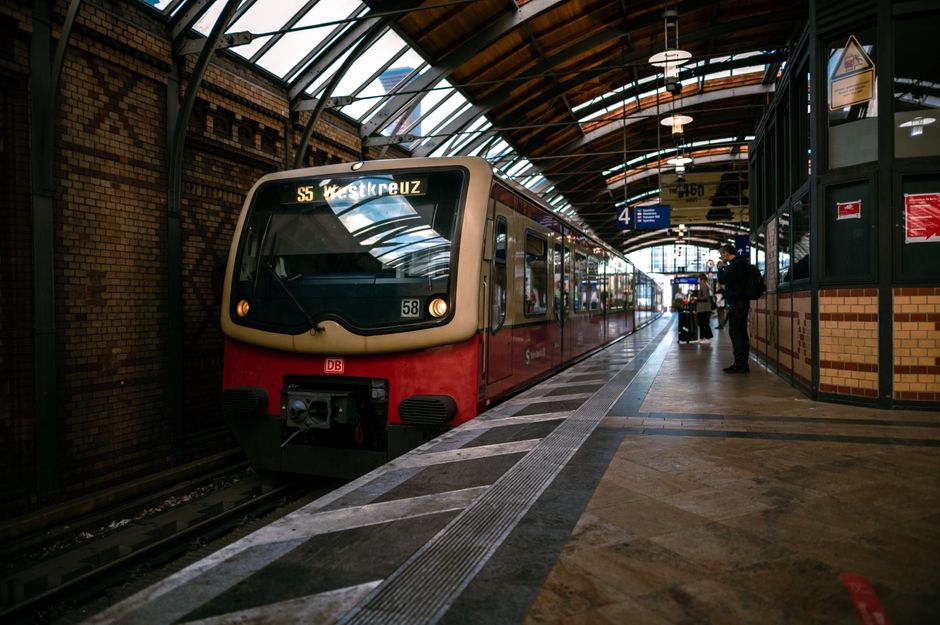
Not all bus routes are equal. Some are reliable, air-conditioned, and frequent. Others are tourist traps packed with pickpockets and running 20 minutes late.
The Good Lines
- Bus 64 — Termini to St. Peter’s. Runs every 7-10 minutes. But it’s the #1 pickpocket line in Rome. Keep your bag zipped and in front of you. Do not use your phone near the doors.
- Bus 40 — Express version of 64. Fewer stops, faster, same pickpocket risk.
- Bus 492 — Termini to Vatican area via Piazza Barberini and Piazza Cavour. Less crowded than 64.
- Bus 170 — Termini to Trastevere. Runs through the night. Useful for late dinners.
- Bus 23 — Circulates around the historic center. Connects Piazza Risorgimento to Piazza San Giovanni. Good for seeing multiple landmarks without the metro.
The Lines to Avoid
- Bus 60 — Often cancelled or rerouted without notice. Google Maps shows it running; reality is different.
- Bus 75 — Unreliable schedule, skips stops randomly.
- Night buses (N lines) — Run every 30-60 minutes. The frequency is theoretical. At 2 AM, you might wait 90 minutes. If possible, walk or take a taxi after midnight.
Real-time tracking: Download the ATAC Mobile app (free, Italian language only but the map is visual). Google Maps is 80% accurate for bus times but doesn’t show real-time delays. The ATAC app shows actual vehicle positions. Use both.
My recommendation: For a first-timer alone, stick to metro for long distances and bus 40 or 492 for the Vatican. Avoid bus 64 unless you’re comfortable with crowds and have your valuables secured.
Metro Lines: Speed vs. Coverage — The Tradeoff You Need to Know
Rome’s metro has exactly three lines: A (orange), B (blue), and C (green). That’s it. Compared to London or Paris, it’s tiny. The metro covers maybe 30% of the tourist areas. The rest is bus or walking.
Here’s the tradeoff: metro is fast but limited; buses are slow but go everywhere.
Metro Line A
Runs from Battistini (west) to Anagnina (southeast). Hits: Ottaviano (Vatican), Spagna (Spanish Steps), Barberini (Trevi Fountain), Termini, San Giovanni (Basilica). Trains every 3-5 minutes during the day. Reliable, air-conditioned, but packed during rush hour (8-10 AM, 5-7 PM).
Metro Line B
Runs from Rebibbia (northeast) to Laurentina (south). Hits: Termini, Cavour (Colosseum), Circo Massimo (Circus Maximus), Piramide (Testaccio). Less crowded than Line A. Connects to Roma-Ostia train for beach day trips.
Metro Line C
Only partially open. Runs from Monte Compatri-Pantano to San Giovanni. Connects to Line A at San Giovanni. Useful if you’re staying in the eastern suburbs. Otherwise, ignore it.
The real problem: No metro to Trastevere, no metro to Villa Borghese, no metro to Piazza Navona. For those, you need buses or your feet. A common mistake is taking the metro to Colosseo station (Line B) and then walking 20 minutes to Trastevere — that’s a 40-minute round trip you could have avoided with bus 23 or tram 8 from Piazza Venezia.
Verdict: Use metro for long, straight-line trips (Termini to Vatican, Termini to Colosseum). For everything else, combine metro with a short bus ride. The Roma 24h pass makes this seamless.
How to Avoid Getting Fined: The Four Rules That Matter

ATAC inspectors are not aggressive, but they are thorough. They board buses and metro trains in plain clothes, then identify themselves and check every passenger’s ticket. I’ve seen them fine 12 people on a single bus 64 ride. The fine is €100, reduced to €50 if paid within 5 days. It’s not worth the risk.
Rule 1: Validate before boarding. On buses, find the validator immediately. Do not sit down first. Do not wait until the next stop. Validate as you step on. If the validator is broken, move to another door. If all validators on that bus are broken, take a photo of the broken machine as evidence. Inspectors have been known to still issue fines even when machines are broken; the photo helps you contest it.
Rule 2: Keep your ticket until you exit. Inspectors sometimes check at the end of your journey, especially on metro lines. Throwing away your validated ticket early = no proof = fine.
Rule 3: Digital tickets are fine, but have a backup. The ATAC app sells digital tickets that activate on your phone. These work. But if your phone battery dies, you have no ticket. Carry a physical BIT ticket as backup. It costs €1.50 and saves you €100.
Rule 4: Do not use someone else’s pass. Roma 24h passes are non-transferable. If an inspector checks and the name on the pass doesn’t match your ID (for reduced-fare passes), it’s a fine. Tourists rarely use reduced passes, but if you bought a child’s ticket for yourself, that’s also a fine.
One more thing: Inspectors cannot accept cash payments for fines on the spot. They issue a citation that you pay later. Anyone demanding cash on the bus is a scammer. Real inspectors wear ATAC badges and carry handheld devices.
Trastevere to the Colosseum Without the Metro: A Real Route Tested
Let me give you a concrete example of how to navigate a common trip that the metro doesn’t cover well. You’re staying in Trastevere. You want to reach the Colosseum. The metro doesn’t go to Trastevere. Here’s what actually works.
Option A: Bus + Metro (25 minutes, €1.50)
Walk to Viale di Trastevere. Take bus 23 or 8 towards Piazza San Giovanni. Get off at Piazza San Giovanni in Laterano. Walk 5 minutes to the Colosseum. Total cost: one BIT ticket (€1.50). Total time: 25 minutes if traffic is light, 35 minutes if heavy.
Option B: Tram + Walk (20 minutes, €1.50)
Take tram 8 from Piazza Venezia (15-minute walk from Trastevere) to Piazza San Giovanni. Then walk. This is faster but requires you to walk to Piazza Venezia first.
Option C: Walk (30 minutes)
From central Trastevere (Santa Maria in Trastevere), walk across Ponte Sisto, through Piazza Farnese, past Largo di Torre Argentina, then along Via dei Fori Imperiali. It’s 2.2 km. Flat. Beautiful. No ticket needed.
My pick: Option C. For a solo traveler, walking is safer, more scenic, and avoids the stress of bus timing. Save the bus for longer distances or rainy days.
When the Bus Doesn’t Come: What to Do When Google Maps Lies
This happened to me at Piazza Barberini. Google Maps said bus 62 arrives in 4 minutes. After 15 minutes, it updated to 8 minutes. After 25 minutes, I gave up and walked. This is not unusual.
Rome’s buses have a reputation for unreliability, especially on weekends and evenings. Here’s how to handle it:
- Check the ATAC app first. It shows real-time vehicle positions. If the bus is 15 minutes away and not moving, it might be stuck in traffic or cancelled. Google Maps does not show this.
- Have a backup route. Before you leave, identify 2-3 ways to reach your destination. For example, if bus 64 doesn’t come, bus 40 + a 10-minute walk might work.
- Walk to a major hub. If you’re waiting at a small stop and the bus doesn’t come, walk 5 minutes to a larger stop like Termini, Piazza Venezia, or Piazza Barberini. Those have more frequent service.
- Use the tram. Trams (lines 2, 3, 5, 8, 14, 19) are more reliable than buses. They have dedicated tracks for parts of their route and are less affected by traffic. Tram 8 from Piazza Venezia to Trastevere runs every 5-7 minutes.
- Accept the walk. Rome is compact. Most tourist attractions are within 30 minutes of each other on foot. If the bus is delayed more than 15 minutes, just walk. You’ll see more anyway.
The hard truth: Rome’s public transport is not designed for tourists. It’s designed for residents. The system works well for commuters going to Termini or EUR. For tourists moving between scattered landmarks, walking + occasional metro is more reliable than depending on buses.
What to Carry in Your Day Pack for Stress-Free Solo Travel
Navigating Rome’s transport alone means you need to be self-sufficient. You can’t rely on a travel partner to watch your bag while you buy a ticket. Here’s what I carry and why.
Essential items:
- A small crossbody bag — Not a backpack. On crowded buses, backpacks are targets. A crossbody bag worn in front keeps your valuables visible and accessible. The Pacsafe Citysafe CX (€85) has RFID blocking and cut-resistant straps. Not cheap, but cheaper than replacing a stolen passport.
- €20 in small bills — Ticket machines sometimes reject cards. Tabacchi shops prefer cash for single tickets. Keep €5 and €10 notes, not €50s.
- Power bank (10,000mAh minimum) — Your phone is your ticket, map, and translator. A dead phone at a bus stop with no ticket is a problem. The Anker PowerCore 10000 (€25) charges a phone twice and fits in a jacket pocket.
- Printed map of metro lines — Yes, paper. When your phone dies or has no signal underground, a paper map shows you which direction to go. ATAC has free maps at Termini ticket booths.
- Phone leash — A simple lanyard that attaches to your phone case. On bus 64, phone snatching happens in seconds. A leash buys you time and attention.
What to leave at the hotel:
- Passport (carry a photocopy or phone photo instead)
- Large amounts of cash
- Laptop or tablet (unless you need it for work)
- Expensive jewelry or watches
Final thought: The best way to navigate Rome’s public transport alone is to accept that you will make small mistakes. You will get on the wrong bus. You will miss a stop. That’s fine. Every wrong turn is a story. The key is to avoid the expensive mistakes — the fines, the pickpockets, the scams. With a validated ticket, a crossbody bag, and a power bank, you’re set.
That guy at Termini offering the €50 ticket? Walk past him. Buy a €1.50 BIT from the tabacchi inside the station. Validate it. And enjoy the ride.
