

Pick up almost any Rick Steves guidebook and the same phrase appears somewhere in the introduction: travel as a political act. That line explains more about his method than any packing list. Steves does not optimize for cheap. He optimizes for real. Those two goals require very different decisions, and the distinction is what separates his system from generic budget-travel advice.
Below is how that system actually works in practice, broken into the decisions that matter most.
What Rick Steves Actually Teaches (And Why Budget Is Not the Point)
The framework is simpler than most people expect: spend less on sleep, spend more on experience. Steves consistently books pensions and family-run guesthouses over branded hotels, not because he is frugal by nature, but because he believes the owner of a small 10-room pension in Assisi will teach you more about Italy than any Marriott concierge ever could. The money saved on accommodation funds a longer trip, a better meal, or a day in a town you did not plan to visit.
That is the whole philosophy. Everything else is execution.
Packing Light: The One-Bag Rule That Rewires How You Travel
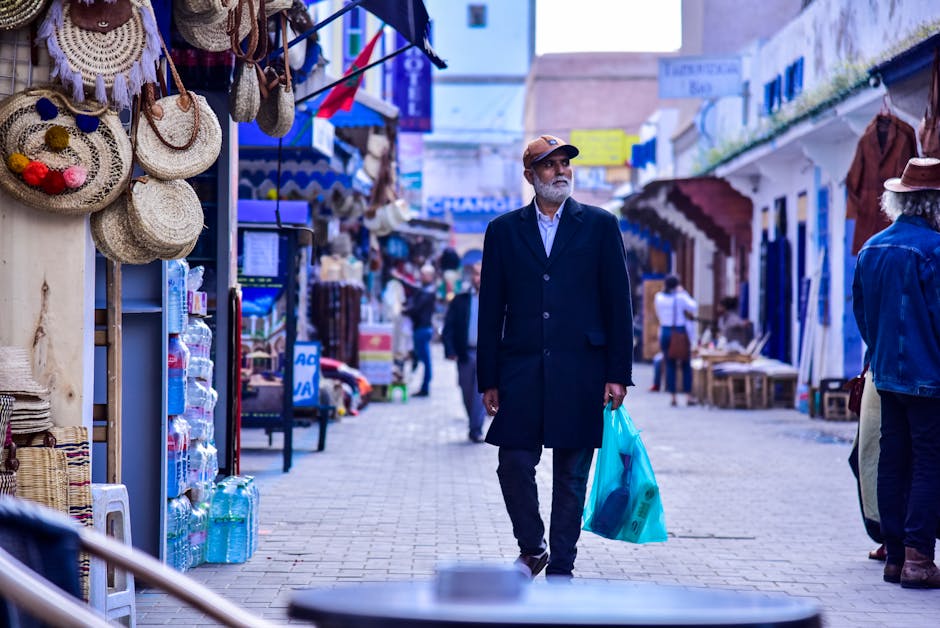
Steves has repeated the same carry-on rule for four decades, and the logic has not aged: one bag, carry-on size, under 20 pounds total. That is roughly 9kg for a two-week trip across four countries. It sounds extreme until you have done it once and realized you spent zero minutes waiting at baggage claim, took the city bus instead of a taxi, and moved between cities without a second thought.
A wheeled suitcase does not just add weight. It changes which decisions are available to you. You take taxis because you cannot manage stairs. You stay put because moving is a production. You stress about luggage storage while everyone else is walking. The carry-on is not about saving the checked-bag fee. It is about keeping every option open.
Which Bag to Actually Use
The Rick Steves Convertible Carry-On (around $120 from his site, 22 liters) has packaway backpack straps so it works through train stations and reads as a normal bag at dinner. It is not the most stylish option on the market. It is built for exactly the movements European travel demands: cobblestone streets, overhead bins, overhead lockers in overnight trains.
If you want more capacity, the Osprey Farpoint 40 ($160, 40 liters) fits most airline overhead bins and includes a detachable 13-liter daypack. The Tom Bihn Synik 30 ($300, 30 liters) is the premium pick — surgical organization, bomber build quality, made in the USA — but at twice the price of the Osprey with less volume. For most travelers, the Osprey wins on value. The Tom Bihn wins if you use it 30 times a year.
What to Actually Pack Inside It
One week of clothes. Regardless of trip length. You do laundry in Europe — laundromats are everywhere, many pensions offer a wash cycle, and some hotels will turn it around in 24 hours for a few euros. Packing for every day means checking a bag or wrestling a roller across cobblestones at 11pm after a delayed regional train.
Eagle Creek Pack-It Specter compression cubes (around $30 for a three-piece set) cut the space your clothes occupy by roughly half without destroying fabric. Use them. Pack neutrals that layer and mix. Bring one pair of walking shoes that can also pass for dinner.
The Jacket Trap
Outerwear is where most one-bag attempts collapse. One packable rain jacket solves 90% of European weather scenarios outside of December in Scandinavia. The Patagonia Torrentshell 3L ($149) packs to roughly fist-size and handles sustained rain without turning you into a sauna. Heavy coats for anything except winter mountain trips are luggage weight that earns nothing.
Planning Your Europe Itinerary the Rick Steves Way
Steves structures days around a consistent logic: big sights before 11am, secondary sights in the afternoon, neighborhoods after dinner. It is not arbitrary. Major museums fill fast. The Vatican, the Uffizi, the Rijksmuseum — arrive after 10am without a timed entry and you will queue for an hour. The same sites are quieter between 8am and 10am and again after 4pm. Adjust accordingly.
Here is what a Steves-style week in Italy actually looks like on paper:
| Day | Morning | Afternoon | Evening |
|---|---|---|---|
| 1 | Arrive Rome, check in, short rest | Orientation neighborhood walk | Dinner in Trastevere |
| 2 | Vatican Museums (pre-booked timed entry) | Castel Sant’Angelo exterior and bridge | Campo de’ Fiori aperitivo |
| 3 | Colosseum and Roman Forum (book ahead) | Palatine Hill, gelato, slow walk back | Testaccio local neighborhood |
| 4 | Train to Florence, 1.5 hrs, approx €30 | Uffizi Gallery or Accademia (pre-booked) | Dinner in Oltrarno, early night |
| 5 | Duomo climb (timed entry required) | Pitti Palace and Boboli Gardens | Gelato tour, early rest |
| 6 | Cinque Terre day trip by regional train | Village-hopping or coastal hike | Return to Florence by 8pm |
| 7 | Train to Venice, approx 2 hrs, €35–50 | Grand Canal vaporetto ride, San Marco | San Polo neighborhood, quiet dinner |
The thread holding this together is train travel. The Trenitalia Frecciarossa from Rome to Florence runs at 300km/h and takes 90 minutes. No rental car, no parking in Florence (essentially impossible and eye-wateringly expensive), no navigation stress. High-speed rail in Italy, France, Spain, and Germany is not a compromise — it is faster door-to-door than flying for most city pairs under 600km.
Five Mistakes Rick Steves Has Been Correcting for Decades

These appear in his books, podcasts, and interviews in one form or another. They are not hypotheticals.
- Scheduling too much on arrival day. Jet lag is physiological, not motivational. Booking a 9am museum slot on your first morning after a transatlantic overnight flight means seeing the Louvre while running on four hours of broken sleep in a pressurized cabin. Steves builds arrival days deliberately light: a walk, a market, an early dinner. Major sights start on day two.
- Eating at restaurants with photos on the menu. The photo menu signals that the kitchen is optimizing for nervous tourists who need visual confirmation. The handwritten chalkboard at a trattoria with locals eating lunch at 1pm is almost always a better meal at a lower price. The uncertainty is the point.
- Using airport ATMs on arrival. Airport currency exchange desks and ATMs consistently offer worse rates, and many push “dynamic currency conversion” — converting your withdrawal to home currency at their rate rather than the bank’s. Always decline that option. A better long-term solution: the Charles Schwab High Yield Investor Checking account refunds all ATM fees worldwide at month-end, and the Wise card converts at near mid-market exchange rates. Together, they eliminate most of the friction and fees of accessing money abroad. On a two-week trip, the difference versus airport exchange can reach €60–€100.
- Treating museums as the main event. Steves has said repeatedly that the best part of any city is rarely inside the museum. The cafe across the street, the market two blocks away, the square where locals sit at noon — these are the places that accumulate into a real memory of a city. Museums matter. They are not everything.
- Defaulting to chain hotels. A Novotel in Rome and a Novotel in Hamburg have the same lobby, the same breakfast, and the same absence of local knowledge. A 12-room pension in Rome’s Prati neighborhood, run by the same family for 30 years, costs the same or less and comes with a host who will tell you which trattoria actually feeds the locals. That information has a value that does not appear on the booking page.
Getting Around Europe: Three Transit Questions Answered Directly
Transport decisions shape the entire trip, and they are also where travelers waste the most money on the wrong assumptions.
Is a Eurail Pass Worth Buying?
Not automatically. A Eurail Global Pass starts around $300 for a youth 4-days-in-one-month option and scales up sharply from there. If your itinerary is fixed, book individual point-to-point tickets in advance — especially on high-speed routes like Paris to Barcelona or Rome to Milan, where advance prices are often €30–€60 and the pass reservation fee adds another €10–€13 per train on top of pass cost. Passes earn their value on flexible itineraries, spontaneous detours, or when advance pricing is unavailable. Run the numbers for your actual route before buying one.
Train or Bus Between Cities?
Train for the main network — Germany, France, Switzerland, Austria, Italy. Bus for gaps the rail network does not cover — rural Portugal, most of Croatia, much of Greece. In the Balkans especially, long-distance buses are faster and cheaper than trains for many routes. Do not fight the local transport logic; work inside it.
What About the Rick Steves Audio Europe App?
Download it before departure. The app is free and contains narrated audio tours Steves recorded for specific sites — the Uffizi, the Orsay Museum, the Acropolis, the Roman Forum, and dozens more. You walk at your own pace, pause and rewind, skip sections that do not interest you. For solo travelers and pairs who want depth without the rigidity of a group tour, it is more useful than most paid audio guides offered at the entrance desk.
Accommodation: The Pension Case Is Not Negotiable
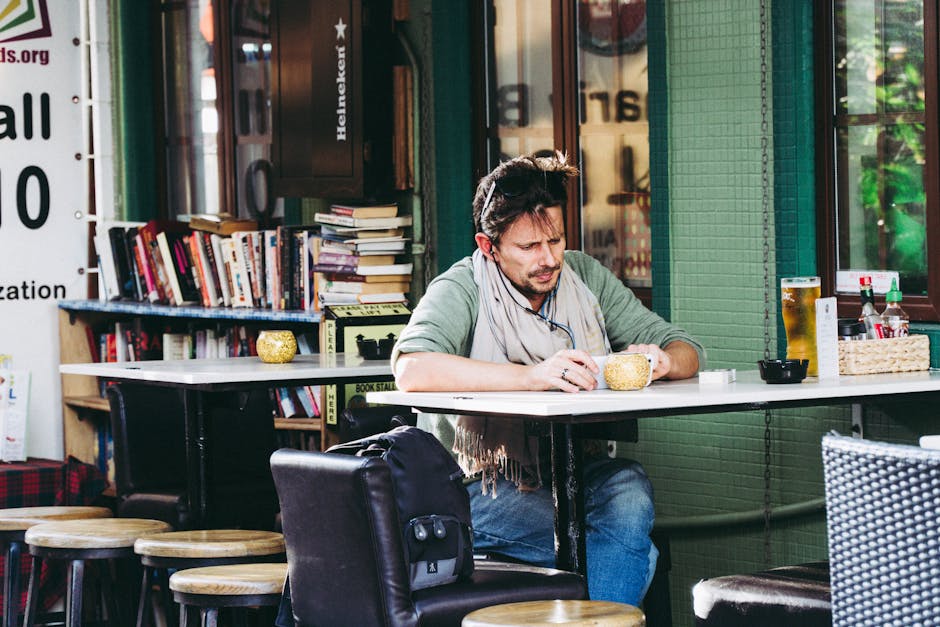
Skip the chain hotels. This is the most consistent position Steves holds across all 40+ of his guidebooks, and it is not soft preference — it is structural. Family-run pensions centrally located in Rome or Prague charge €90–€130 per night and put you inside the neighborhood. A branded hotel in the same city at the same price is often a 20-minute taxi from anything interesting, with a lobby designed to feel like everywhere and nowhere simultaneously.
The host at a small guesthouse is your best single resource in any city. They know which restaurant two streets over just changed owners and went downhill. They know the museum is closed on Monday. They know where the good market is on Saturday morning. That knowledge is not available on any app and cannot be replicated by a front desk with 400 rooms behind it.
If you are finding these properties independently — without buying every Steves guidebook for every country — the search logic is simple. On Booking.com, filter by property type: bed and breakfasts and guesthouses specifically. Read reviews where guests mention the host by name. Prioritize walking distance to transit over in-room amenities. A €100 pension two blocks from the train station beats an €80 hotel requiring a €20 taxi every direction.
The room will be smaller. The walls may be thin. The breakfast is included and will be better than what you would order at a cafe for that price. Take that trade.
Rick Steves Self-Planned vs. Package Tour: The Direct Comparison
Steves is not opposed to guided tours — he runs his own. But the cost and experience tradeoffs between his self-planned method and standard package travel are concrete, not philosophical.
| Factor | Rick Steves Method (Self-Planned) | Standard Package Tour |
|---|---|---|
| Daily cost, mid-range Europe | €100–€160 all-in (accommodation, food, transit) | €180–€350+ including tour fee |
| Flexibility | Full — change plans same morning | None — itinerary fixed at booking |
| Accommodation type | Pensions, family guesthouses, central location | 3–4 star chain hotels, often outside center |
| Time at each site | You decide | Fixed, typically 45–90 minutes per major stop |
| Local interaction | High — you navigate, eat locally, discover | Low — coach to hotel to attraction loop |
| Best for | Experienced travelers, pairs, solo travelers | First-timers who want logistics fully handled |
| Worst for | Travelers who dislike uncertainty or open schedules | Anyone wanting depth, spontaneity, or real contact with a place |
| Rick Steves tour equivalent | Self-planned, 14 days Italy: approx $2,000–$2,500 per person | Rick Steves Best of Italy guided tour: approx $4,000 per person |
Rick Steves’ own guided tours are competitive within the package-tour tier — his two-week Italy tours run around $4,000 per person and include accommodation, local guides, and all internal transport. That is fair pricing for what it delivers. The self-planned version of the same itinerary, using his guidebooks as the map, costs roughly half. The difference is not quality — it is control. Decide which you actually want before you book anything.
