
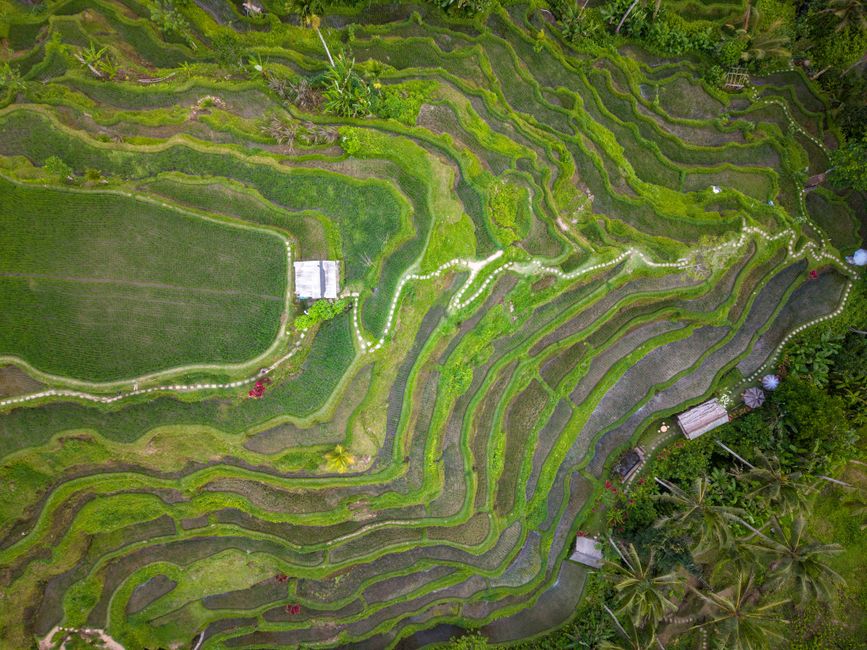
Bali rewards travelers who slow down and plan by region. This seven-day route uses Ubud, Sidemen and the east coast to show you rice fields, temples, beaches and village life without spending every day in traffic.
How to split seven days without wasting them
The smartest Bali itinerary uses two or three bases instead of one hotel for the whole island. Bali looks compact on a map, but a 35-kilometer drive can take two hours when traffic builds around Kuta, Canggu, Ubud and the airport. Moving less gives you more time outside the car.
Use Ubud for culture, not every attraction
Spend the first two nights in Ubud, preferably north of the central market or near a quieter village such as Pejeng. Ubud works well for temples, cooking classes, rice-field walks and craft studios. It is a poor base for daily trips to southern beaches or East Bali. Skip the plan of visiting Uluwatu, Tegallalang and a waterfall from the same room. You will see roads, parking lots and tour buses instead of Bali.
Make Sidemen your slow-travel base
Move east for two nights in Sidemen, then continue to Amed or Sanur for the final three nights. This order reduces backtracking and gives you an easier airport departure. Hire a local driver for long day routes, but use Grab or Gojek for short trips where coverage and pickup access are clear. My verdict is simple: two bases beat a one-hotel itinerary for a first seven-day visit because the route follows Bali’s geography rather than a checklist.
Days 1 and 2: Ubud beyond the photo circuit
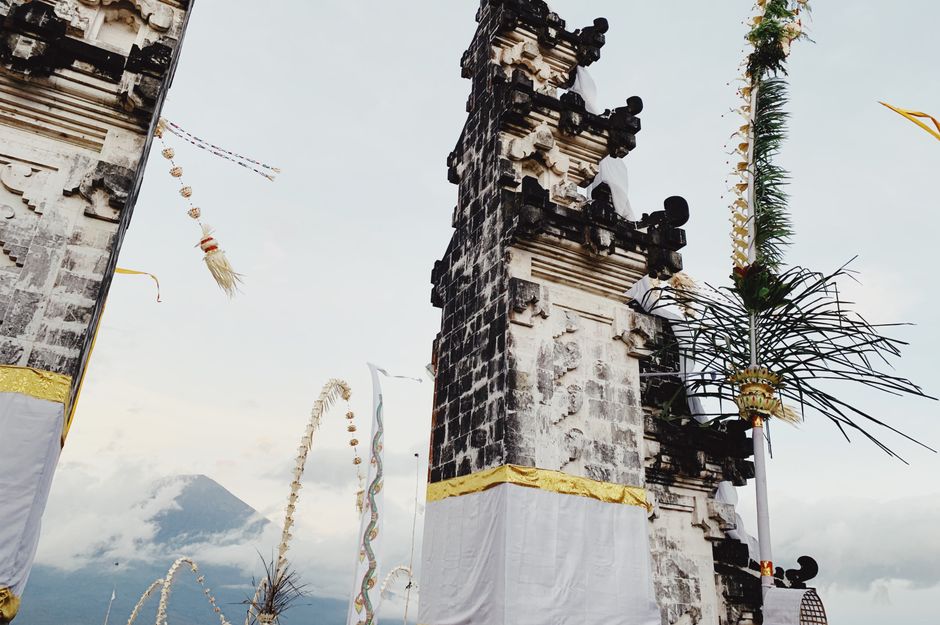
Ubud should begin gently. Jet lag, heat and narrow roads make an overloaded first day a bad bargain.
Day 1: arrive, reset and walk locally
| Time | Plan | Practical detail |
|---|---|---|
| Morning or afternoon | Arrive at Ngurah Rai Airport | Allow 60 to 120 minutes for immigration, bags and pickup |
| Late afternoon | Check in and walk around Ubud | Choose a nearby warung instead of crossing town |
| Evening | Ubud Palace or a local dance performance | Buy tickets from the venue, not a random street seller |
Day 2: one temple zone and one quiet walk
Start at Yeh Pulu, a carved rock relief site near Bedulu, before the heat rises. Continue to Goa Gajah only if the site is open and the entrance area is manageable, then eat lunch away from the main market. In the afternoon, take a guided walk through Pejeng’s rice fields or visit a small family-run craft studio. The guide matters because unmarked paths cross working farms and temple grounds.
Do not build the day around the Bali Swing packages at Tegallalang. They often add costume changes, queues and separate photo fees to a landscape you can view without the staged platform. The winning Ubud formula is one cultural site, one village experience and a long lunch.
Days 3 and 4: Sidemen and East Bali’s quieter side
Sidemen is the best choice for travelers who want green valleys and fewer nightlife crowds. It is not a place for constant entertainment, and that is the point.
- Day 3 morning: Leave Ubud after breakfast and stop at Klungkung’s Kerta Gosa before continuing east. The painted ceiling panels explain Balinese ideas about justice and the afterlife in a way that feels more grounded than a quick temple photo stop.
- Day 3 afternoon: Check into Sidemen and book a two-hour rice-field walk with a local guide. Wear sandals with a firm sole; irrigation paths become slippery after rain. Ask before photographing ceremonies, offerings or people working in the fields.
- Day 3 evening: Eat at your guesthouse or a small local restaurant. Sidemen’s roads are dark and winding after sunset, so walking far for dinner is not a smart saving.
- Day 4 morning: Visit Tenganan village, one of Bali’s traditional Bali Aga communities, then continue toward Karangasem. Dress modestly and follow local photography rules.
- Day 4 afternoon: Choose Tirta Gangga or Virgin Beach, not both plus Lempuyang Temple. Tirta Gangga is easiest early, while Virgin Beach is better for swimming and a relaxed seafood lunch.
Lempuyang’s famous gate can consume half a morning in a queue for a photo that relies on a mirror trick. Visit for the temple only if you accept that the gate is a crowded landmark, not a secret viewpoint. For a calmer East Bali day, Sidemen’s village walk is the clear winner.
Day 5: choose the right south-coast base
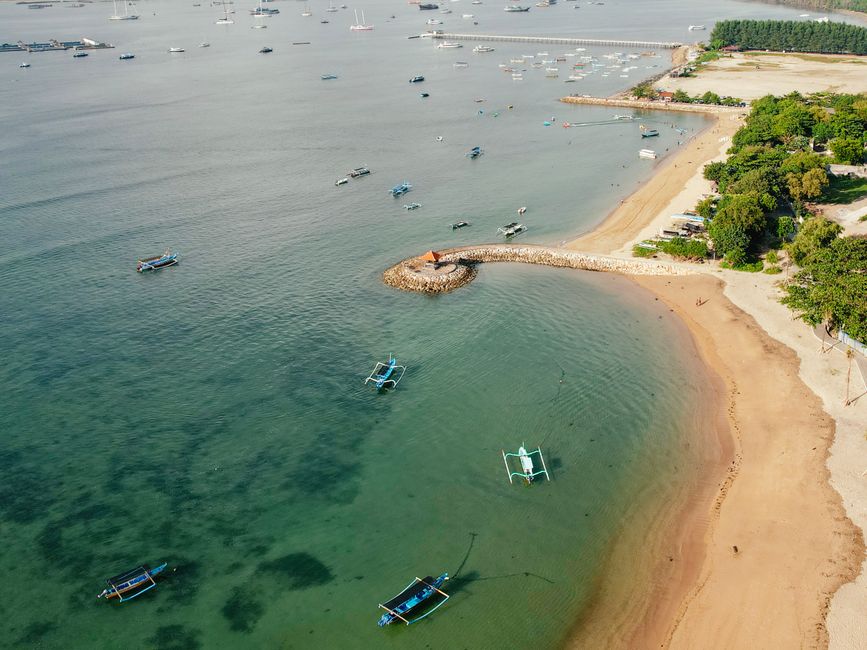
South Bali is not one experience. Pick a coast based on the final mood you want, then stay there instead of trying to tour every beach in one day.
| Base | Best for | Main drawback | Verdict |
|---|---|---|---|
| Sanur | Calm mornings, cycling, families and airport access | Less dramatic sunset scenery | Best low-stress choice |
| Uluwatu | Cliffs, surf beaches and sunset views | Long transfers and heavy evening traffic | Best for scenery |
| Nusa Dua | Wide beaches, resort facilities and predictable services | Less local atmosphere | Best for comfort |
| Kuta or Seminyak | Nightlife, shopping and busy beach bars | Crowds, touts and traffic | Skip unless nightlife is the goal |
What to do after choosing
Choose Sanur if this is your first trip and you want a dependable final base. Walk the beachfront path before 8 a.m., rent a bicycle from a licensed shop, and eat at a local market rather than paying beach-club prices for every meal. Choose Uluwatu if cliffs and surf matter more than convenience. Visit Padang-Padang early, then watch the sunset near Uluwatu Temple from a respectful distance. The Kecak performance is popular, so confirm the start time and arrive early.
Do not promise yourself a quick drive between Uluwatu and Seminyak at sunset. A route that looks short can become a slow crawl. My position: Sanur offers the best balance for a seven-day itinerary, while Uluwatu is worth the extra friction only when coastal scenery is your top priority.
Can you fit Nusa Penida into seven days?
Nusa Penida is the most common temptation in a short Bali trip. The island has striking cliffs, but a rushed day trip can replace an entire day of rest and still leave you stuck in traffic.
Is Nusa Penida realistic as a day trip?
It is possible, but it is not my pick for this route. Fast boats require an early start, harbor transfers add uncertainty, and popular viewpoints can have long lines. Kelingking Beach also involves a steep, difficult descent that many visitors underestimate. Add Nusa Penida only if its cliffs are the main reason you came to Bali.
What is the better alternative from East Bali?
Choose Amed instead. You can reach it by road from Sidemen, sleep near the coast and snorkel at Jemeluk Bay or the Japanese Shipwreck area when sea conditions allow. Amed gives you more time in the water and less time handling transfers. It also makes the next day flexible.
Should Tanah Lot replace the east coast?
Only if you are staying near Canggu or Seminyak. Tanah Lot is a worthwhile temple landscape, but sunset is the busiest period and the surrounding lanes are packed with shops. It is a stop, not a hidden gem. The stronger seven-day choice is Amed for marine life or Sidemen for rural scenery.
Day 7: leave Bali with a reliable airport plan
Keep Day 7 deliberately light: eat breakfast near your hotel, pack before sunrise, check the traffic in Google Maps, and leave Sanur at least three hours before an international flight or four hours if you are coming from Uluwatu, because airport queues, road congestion and vehicle drop-off delays can erase a supposedly safe buffer; use GrabCar or Gojek only when the pickup point is clear, keep the driver’s plate number visible, and arrange a hotel car when your flight is early or your luggage is heavy; if you carry an Airalo eSIM, save the booking and driver details offline before leaving, because mobile coverage can fail in dense traffic or during a network pause, and keep a small cash reserve for tolls, parking or a last local meal; the best final-day plan is not another attraction but a clean airport transfer, so choose Sanur for the lowest risk and Uluwatu only when you can accept the longer journey.
2026 traps, costs and the small kit that helps
My strongest recommendation is to plan around time and local rules before adding another attraction. Bali feels expensive when every stop carries a transfer, parking fee, photo fee or rushed meal.
Budget the route with realistic planning ranges
| Expense | Planning range | How to avoid waste |
|---|---|---|
| Local warung meal | IDR 35,000 to 70,000 | Eat where local workers eat |
| Private driver for 8 to 10 hours | IDR 700,000 to 1,000,000 | Agree on hours, fuel and parking first |
| Short ride by app | Check the live quote | Use marked pickup points |
| Foreign tourist levy | IDR 150,000 per person | Pay through the official Love Bali portal |
These are planning figures, not fixed 2026 quotes. Prices change by season, traffic, vehicle size and hotel location. A driver is good value for East Bali, but a poor choice for a short trip across congested southern roads. For packing, the Osprey Farpoint 40 is the best single-bag option because its 40-liter size fits a seven-day capsule wardrobe, while the Anker Nano Power Bank 10,000mAh with 30W USB-C output is enough for maps and phone charging without adding a heavy battery brick. An Apple AirTag weighs about 11 grams and is useful inside checked luggage, but it cannot replace travel insurance or a clear baggage tag.
Dates and mistakes to check before booking
- Nyepi falls on March 19, 2026, from 6 a.m. until March 20 at 6 a.m. Bali restricts travel during the Day of Silence, and airport, road and service operations are affected. Check the 2026 Bali government notice before choosing flights.
- Do not ride a scooter without the correct license, helmet and confidence in left-side traffic. Renting one to save a small transfer fee can turn a holiday into a police, hospital or insurance problem.
- Do not book every temple through a social-media package. Confirm entrance fees, dress rules, opening times and transport costs at the actual venue.
- Do not judge a hidden gem by how empty it looks online. A quiet place may be sacred, privately managed or difficult to reach without local permission.
For a first Bali visit in 2026, the winning balance is Ubud for culture, Sidemen for space, Amed or Sanur for breathing room, and fewer promises on the calendar. That slower pattern is likely to matter even more as Bali’s popular roads and headline attractions keep drawing larger crowds.
