
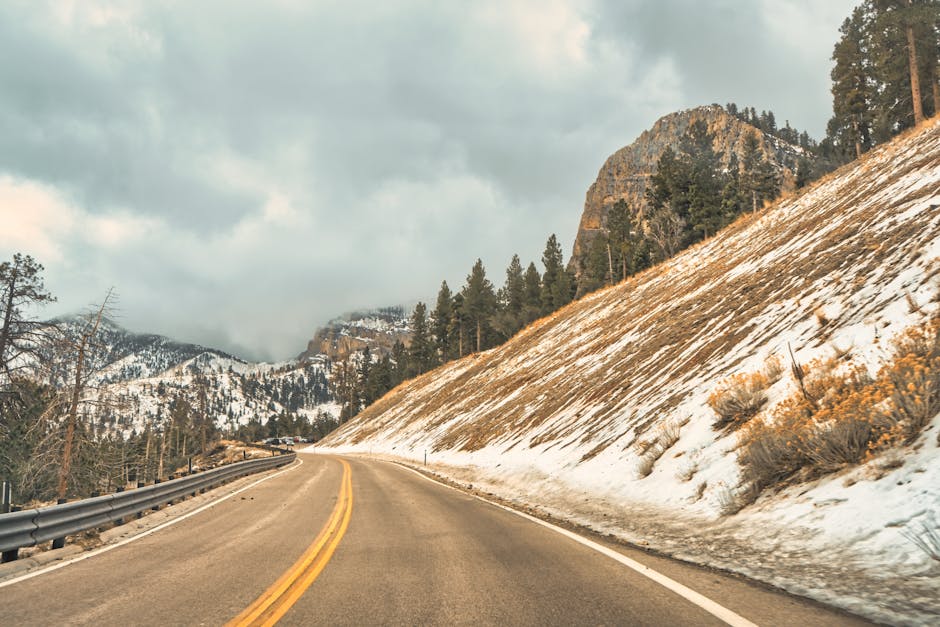
Kenya has 177,000 kilometres of roads. Around 14% of them are paved. That ratio shapes every decision you’ll make about where to drive, what vehicle to take, and how many hours to budget between the map dot and the actual destination.
Most road trip guides gloss over this and hand you a tidy itinerary. This one doesn’t. Below are four specific routes — with real distances, honest condition assessments, and the kind of detail that only matters once you’re actually behind the wheel.
The Southern Safari Circuit: Nairobi to Amboseli to Tsavo
This is the most logical starting point for a Kenya road trip, and also the most misunderstood in terms of timing and cost. The route connects three of Kenya’s most visited parks in a rough triangle. You can complete it in five to seven days or stretch it to ten without running out of landscape.
The Nairobi to Amboseli leg runs 240km via Namanga near the Tanzania border. The road is largely tarmac but deteriorates significantly after Emali. Budget four to five hours minimum — not because of distance, but because speed bumps, truck traffic, and police checkpoints slow everything down. From Amboseli, most drivers head east into Tsavo West, then Tsavo East, before looping back to Nairobi via Mtito Andei on the A109. That final stretch is genuinely good tarmac and fast driving. The section connecting the two Tsavo parks requires a high-clearance 4WD after rain.
Southern Circuit: Distances and Conditions at a Glance
| Leg | Distance | Drive Time | Road Surface | 4WD Required? |
|---|---|---|---|---|
| Nairobi to Amboseli (via Namanga) | 240 km | 4–5 hrs | Tarmac with degraded sections | No (recommended) |
| Amboseli to Tsavo West (Kimana Gate) | 75 km | 2–3 hrs | Dirt/gravel, corrugated | Yes |
| Tsavo West to Tsavo East (Mtito Gate) | 60 km | 1.5–2 hrs | Murram, variable | Yes |
| Tsavo East to Nairobi (A109) | 330 km | 3.5–4 hrs | Tarmac, good condition | No |
Kenya Wildlife Service park fees add a significant cost layer. Amboseli is $70 per person per day (non-resident adult). Tsavo East and West are $52 per person per day. A couple spending two nights in each park is looking at roughly $600 in entry fees alone before accommodation. That surprises almost everyone doing this circuit for the first time.
The best rental vehicle for this circuit is a Toyota Land Cruiser 76 Series or a Toyota Hilux 4WD double cab. Both are widely available through Nairobi operators including Budget Kenya, Avis Kenya, and local outfit Peak Rentals. Expect $90 to $150 per day for a self-drive 4WD depending on the season and mileage terms.
The Rift Valley Loop: Three Nights Minimum, Four Is Better
The Rift Valley loop is the route that experienced Kenya drivers talk about most and that first-timers most often rush. Not because it’s difficult — it’s one of the more accessible Kenya circuits — but because compressing it kills the point.
The standard loop runs northwest from Nairobi on the B3, drops into the valley via the Escarpment Road (substantially improved since 2026 — now solid tarmac almost to the valley floor), then threads through Naivasha, Nakuru, and optionally Bogoria and Baringo before returning via the Nakuru highway. Round trip: roughly 550km.
Naivasha: The Underestimated Overnight
Most drivers treat Naivasha as a fuel stop. That’s a mistake.
Hell’s Gate National Park is 2km from town. It allows self-drive and cycling inside — the only major Kenyan park that permits both — and costs $26 per person per day. The gorge walk takes about three hours. Accommodation ranges from campsites at KSh 1,500 per night (roughly $11) to lakeside lodges above $200. The sweet spot for road-trippers is Crayfish Camp: basic, clean, right on the lake, and a consistent favourite of overlanding groups running this circuit.
Lake Nakuru: The Strongest Stop on the Circuit
Lake Nakuru National Park sits right on the edge of Nakuru town, entry is $52 per person per day, and the rhino population here is one of the densest in East Africa — both black and white. The flamingo numbers fluctuate with water levels, so don’t build your entire itinerary around them. Go for the rhinos. Be pleasantly surprised by the flamingos if conditions are right.
Bogoria and Baringo: The Extension Most Skip
Adding Lake Bogoria and Lake Baringo extends the loop by 160km and one day. The road north from Nakuru to Bogoria is surfaced to the gate junction, then becomes corrugated murram that a standard 4WD handles without issue. Bogoria is worth it specifically for the geysers — you can walk to the edge of bubbling vents directly from the road. When Nakuru water levels push flamingos north, Bogoria can hold 1.5 million birds.
Baringo is a freshwater lake, an entirely different ecosystem, with Nile crocodiles and hippos audible from camp at night. Stay at Roberts’ Camp, established in the 1970s and still family-run.
Drivers who try to compress the full Rift Valley loop — including Bogoria and Baringo — into a weekend from Nairobi see it through a windscreen and remember nothing specific. Three nights is the minimum to do it properly.
Northern Kenya: A Verdict in One Paragraph
North of Isiolo, roads become tracks, tracks become suggestions, and the Samburu-Marsabit-Turkana circuit ranks among the most demanding self-drive routes in East Africa. It requires two vehicles minimum, a Garmin inReach Mini satellite communicator ($349, subscription from $14.95/month), genuine off-road experience, and at least ten days. Don’t attempt it solo, don’t attempt it in the long rains (April to May), and don’t go without iOverlander data downloaded offline. Samburu National Reserve alone — just north of Isiolo on relatively decent roads — is perfectly manageable as a day-two extension from Nairobi and gives you a strong sense of the northern landscape without the expedition-level commitment.
The Maasai Mara Route: Drive It or Fly It?
For most first-time visitors, flying into the Mara is the smarter decision. The drive is worth doing once, but for reasons that have nothing to do with the Mara itself.
The classic drive from Nairobi runs via Narok — roughly 270km, five to six hours in good conditions. Nairobi to Narok is fine tarmac. Narok to the Sekenani or Talek gates is where it gets complicated: either bone-dry murram producing constant dust, or — in the rains — a rutted mud track that has swallowed poorly equipped vehicles.
What makes the drive worth doing once: the descent from the Ngong Hills into the lower plains, the Maasai bomas visible roadside near Aitong, and the full landscape transition from highland to savannah that a 45-minute flight erases entirely. If you care about how one place becomes another — the actual geography of it — the drive communicates something the flight doesn’t.
Drive vs. Fly to Maasai Mara: A Direct Comparison
| Factor | Self-Drive 4WD | Scheduled Flight (Safarilink / Jambojet) |
|---|---|---|
| Journey time | 5–7 hours | 45 minutes |
| Cost one way per person | ~$40 fuel + car hire share | $90–$180 by season |
| Luggage limit | None | 15kg soft bag only |
| Road condition risk | Significant in rainy season | None |
| Stop flexibility | Full — pause anywhere | Fixed schedule |
| Best for | Road trip enthusiasts, budget groups, dry season | Short trips, families, wet season travel |
Safarilink operates the most reliable scheduled flights into Mara airstrips. Jambojet offers cheaper options with less frequency. If you fly in, your camp arranges game drives — almost all properties either run their own vehicles or organise them, which removes the self-drive question entirely and is often the better wildlife experience anyway since guides know where the animals are.
What Kenya Roads Actually Demand From Your Vehicle
Vehicle choice breaks more Kenya road trips than any other single factor. This section covers the specifics that rental desks won’t tell you.
The Toyota Land Cruiser 76 Series is the universal benchmark. It carries a 4.5L V8 diesel producing 151kW, ground clearance of 230mm, and a reliability record in conditions that disable more modern SUVs. If you’re renting and have the choice, take the Land Cruiser over everything else. Full stop.
The Toyota Hilux 4WD double cab is the acceptable alternative — lighter, easier to park, more fuel-efficient (10–12L/100km vs the Land Cruiser’s 14–16L/100km on dirt). Fine for the southern circuit and Rift Valley loop. Marginal on harder northern routes.
What to check before driving off the lot:
- Two spare tyres, not one. On murram roads, one puncture is routine. Two is common. One spare and you’re stranded.
- Tyre tread depth. Many operators push tyres past their safe life because clients don’t check.
- Recovery kit — high-lift jack, tow rope, shovel. ARB Recovery Boards ($140/pair) are worth adding for anything soft or sandy.
- Fuel range. Calculate the distance to the next reliable fuel source before leaving tarmac. The Nanyuki to Samburu stretch has limited options. Carry a 20L Rotopax fuel container ($70) as insurance.
- Offline navigation. Maps.me (free) handles urban driving well. Tracks4Africa East Africa bundle ($49) is the standard for off-road routing — it includes gate locations, campsite coordinates, and track quality ratings that have been crowd-verified by overlanders.
Kenya drives on the left. Speed limits are 50km/h in towns, 80km/h on open roads, 110km/h on designated highways. Police use speed guns actively on the Nakuru highway and Mombasa road. Neither the official fine process nor the unofficial one at a roadblock is a good use of your afternoon.
Three Planning Mistakes That Cost Days and Money
Ignoring the Difference Between Dry and Long Rains
Kenya has two rainy seasons: the long rains (March to May) and the short rains (October to December). The long rains are the one to plan around seriously. The Maasai Mara road from Narok and the murram sections around Amboseli become genuinely impassable after sustained rain. Routes that are straightforward in January become vehicle traps in April.
The best months for a Kenya road trip are July to September (dry, peak game viewing, higher accommodation prices) and January to February (dry, lower crowds, better value). June is borderline — short dry window, worth monitoring forecasts before committing.
Booking Park Accommodation Too Late
Inside-park accommodation books out six to nine months ahead for July and August, especially in the Maasai Mara. Planning a July trip in May means most sought-after camps are already gone. Outside-park accommodation — tented camps in conservancies like Mara Rianta, Ol Kinyei, and Naboisho — typically has availability with two to three months’ notice and often provides better wildlife experiences anyway, with far fewer vehicles per sighting.
Arriving at a Park Gate Without a Loaded KWS Smart Card
Kenya Wildlife Service moved entirely to electronic payment for park entry. Cash is not accepted at most major gates. You load the KWS Smart Card online or at KWS offices in Nairobi before you travel. Showing up at Amboseli gate without a loaded card means turning around. This catches a surprising number of otherwise well-prepared visitors every year.
For the southern circuit — two nights in Amboseli, two nights in Tsavo East — load at least $400 for two adults to cover entry fees comfortably. More if you’re adding optional game drives through the camps.
For a first Kenya road trip, the Rift Valley loop combined with Amboseli is the most complete and manageable circuit. It balances accessible roads, genuine wildlife density, and landscape variety without requiring expedition-level preparation. Do it in five nights, drive a Toyota Hilux or Land Cruiser, load your KWS Smart Card before leaving Nairobi, and carry Tracks4Africa offline. The Maasai Mara follows naturally on a second trip — and northern Kenya after that, when you know what the roads are actually asking of you.
