

You arrive at the airport two hours early for a flight that lasts less than two hours. Then come the bag drop, security line, gate transfer, and airport bus at the far end. In March, several European train routes offer a better calculation: a city-centre departure, a simpler boarding process, and an arrival close to the place you actually want to visit.
The strongest rail choices are not automatically the longest journeys. They are the routes where the train removes airport transfers, early check-in, and baggage friction. This guide compares the time, cost, and practical limits of major March rail trips in 2026. Fares and schedules change, so treat the prices below as published starting points rather than promises for every departure.
Why March trains can beat flights on total travel time
The queue is part of the journey
A flight comparison that uses only time in the air gives airports an unfair advantage. A realistic flight clock starts when you leave the city centre and ends when you reach the final destination. Add the airport transfer, recommended arrival window, bag drop, security, boarding, taxiing, baggage collection, and the trip from the arrival airport. A 90-minute flight can easily consume five hours of useful travel time.
High-speed rail changes several of those steps. Many trains depart from central stations, allow passengers to keep ordinary luggage with them, and avoid a separate baggage-claim wait. Security is not absent on every route, though. London departures on Eurostar involve document checks and controlled boarding, while domestic and Schengen rail journeys are usually more open. The correct comparison is not train versus plane in the abstract. It is door-to-door time on the exact day and route.
March improves the calculation
March sits between the winter low season and the heavy Easter and summer peaks. That often means better availability and calmer stations, especially on Tuesday, Wednesday, and Saturday departures. Weather can still disrupt mountain routes, and school holidays can create sudden demand. The best March rail plan leaves room to choose an early afternoon departure rather than forcing the cheapest train at an awkward hour.
Five March routes with a strong airport-queue advantage
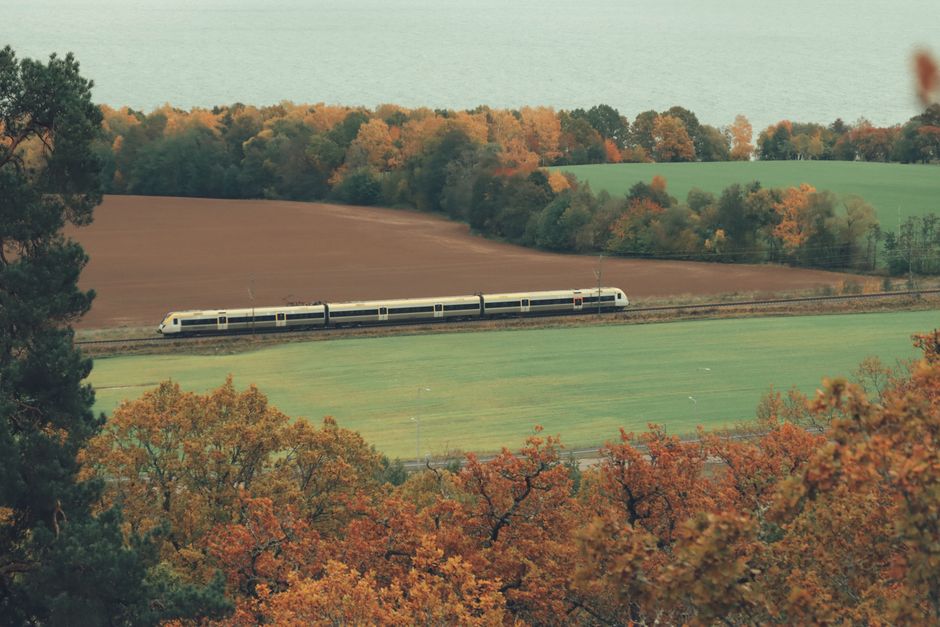
The fastest city-centre options
These routes stand out because the rail journey itself is short enough to compete with flying before the airport time is added. The services are established brands with published route data, not generic train examples.
| Route and service | Published journey detail | Published starting fare or frequency | Best use |
|---|---|---|---|
| London to Paris — Eurostar | About 2 hours 16 minutes | From £39 one way | Short international city break |
| Paris to Lyon — TGV INOUI | Fastest services about 1 hour 43 minutes | Schedules vary by day | France-to-France connection |
| Rome to Florence — Frecciarossa | Just over 1.5 hours | More than 100 daily connections on the route, subject to variation | Italian art and food itinerary |
| Rome to Florence — Italo | About 1 hour 25 minutes | Published fares from €14.90 | Low-cost high-speed alternative |
| Madrid to Barcelona — Renfe AVE | Direct trains about 2 hours 30 minutes | Fare varies by train and booking date | Two-city Spain trip |
How to read the fare figures
Starting fares are useful for identifying a route, not for setting a complete trip budget. The lowest ticket may be tied to one departure, a restricted exchange policy, or a booking window that has already passed. For a fair comparison, record the train fare, local transport to the station, seat or luggage charges if any, and the cost of reaching the airport alternative. For the specific queue problem, Eurostar London to Paris is the clearest winner because both stations sit inside the urban core and the published rail time is short. For Italy, Italo has the strongest advertised low fare, while Frecciarossa offers the broader frequency advantage.
Which train service fits each March trip?
Choose Eurostar for a cross-border city break
For London to Paris, Eurostar is the firm recommendation. The published journey time is about 2 hours 16 minutes, and the train arrives at Paris Gare du Nord rather than an airport outside the city. The tradeoff is a formal pre-departure process: passengers need valid travel documents and must allow time for border checks and boarding. That still works well for a weekend because the arrival point saves a long airport transfer.
Eurostar also links London with Brussels and Lille, with published fastest times of about 1 hour 53 minutes and 1 hour 22 minutes. Those journeys make rail especially attractive for travellers whose final destination is central Brussels or northern France. A £39 starting fare can be excellent, but March weekends and school-holiday dates may cost much more.
Choose Italian or Spanish high-speed rail for multi-city travel
For Rome to Florence, the best choice is Italo when the €14.90 starting fare is available and the departure time works. Italo lists a journey of about 1 hour 25 minutes and around 32 trains each day. Frecciarossa is the better pick when departure flexibility matters, with Trenitalia publishing more than 100 daily connections on the Rome–Florence route, subject to timetable changes.
For Madrid to Barcelona, Renfe AVE is the clear rail option for a two-city itinerary. A direct journey of about 2 hours 30 minutes connects central stations, so flying usually adds time at both ends. The verdict is simple: use a high-speed train when the route joins two city centres in under three hours; use an airport only when the rail journey requires several awkward changes.
March rail mistakes that create the queues you wanted to avoid
Five errors to remove before booking
- Comparing only the advertised flight time. Add both airport transfers and the required arrival window before deciding.
- Choosing a remote station without checking the final transfer. A cheap ticket to an outlying airport-style station can erase the rail advantage.
- Booking separate connecting tickets too tightly. A 20-minute connection may look efficient but leaves no protection against a delay.
- Ignoring the ticket conditions. The lowest March fare may not allow a free change or may apply only to one named train.
- Assuming every rail route has airline-style luggage restrictions. Rules differ by operator and train type, so check the current allowance before arrival.
- Using a weekend engineering timetable as if it were a normal weekday. Saturday and Sunday services can take longer or require a replacement bus.
The most expensive mistake is not always the highest fare. It is a cheap itinerary that forces a hotel night, a missed connection, or a taxi across a city because the final station was chosen without checking the map. March rewards early timetable checks, but it also rewards flexibility. Keep one later departure in reserve when the route has limited frequency.
When should you choose a flight instead?
Is the train still faster after border checks?
For international departures with strict document checks, the train does not remove every queue. London to Paris still requires a controlled check-in process. If your hotel is far from central London or Paris, that extra time may narrow the advantage. The train remains the better choice when the stations are convenient, the fare is reasonable, and the trip ends near the city centre.
When does an airport connection win?
Flying can be the sensible option for a route that needs several rail changes, crosses a large distance, or has poor March frequency. It can also win when a direct flight leaves from a nearby airport and the train requires an overnight stop. A rail journey is not automatically the lower-stress option if it involves three platforms, two separate tickets, and a final bus in bad weather.
What if price decides the trip?
Compare the full fare at the time you can actually travel. Italo’s published Rome–Florence starting fare of €14.90 shows how cheap advance rail can be, but that price may disappear on a popular March weekend. Low-cost flights may also add seat, cabin-bag, and airport-transfer costs. The clearest rule is to choose the train for a direct city-centre route under three hours, and choose the flight when the rail itinerary is materially longer or less reliable.
The best March train depends on the problem you are solving
Best for avoiding airport queues
Eurostar London to Paris is the strongest overall recommendation. Its published journey time is about 2 hours 16 minutes, the route is direct, and both ends are central. The main limitation is the required pre-departure border process, so travellers should not arrive at the station at the last minute.
Best for a flexible Italian itinerary
Frecciarossa is the best choice when frequency matters. Rome to Florence takes just over 1.5 hours, and the route has a large number of daily connections. Italo is the better value pick when its published €14.90 starting fare is available and the chosen departure fits the day.
Renfe AVE Madrid to Barcelona is the best two-city Spain option. A direct journey of about 2 hours 30 minutes keeps the trip simple and avoids the airport transfer problem. Check the exact March timetable, fare restrictions, station location, and connection plan before paying.
This is not legal advice — consult a licensed attorney.
The most important takeaway is to compare March rail and air journeys from hotel door to hotel door, because the train wins when it removes more airport time than it adds travel time.
