

What a travel pillow actually fixes
The common mistake is thinking a travel pillow should feel like a soft bed pillow. Its real job is smaller and more useful: it stops your head from dropping into a painful angle while you sit upright. A good pillow supports the gap between your neck and the seat, keeps your chin from falling toward your chest, or gives your cheek somewhere stable to rest.
The airplane seat is the real problem
Most economy seats push your shoulders forward and leave little space behind your neck. When you fall asleep, your head becomes heavy and your neck muscles work to stop it from rolling sideways. That is why a thick pillow can still feel useless. If it only fills the space behind your neck, your head may continue tipping forward or away from the supported side.
Choose support before softness
Look for a shape that matches your sleeping position. Side sleepers need a firm side wall. Forward sleepers need chin support or a front fastening system. People who lean back need rear support that does not force the head forward. Neutral neck position matters more than plush fabric. A pillow that feels slightly firm for the first minute can be more comfortable after two hours than a soft ring that collapses under your head. The best budget travel pillow is the one that controls movement without making your shoulders lift.
Measure your fit before spending a dollar
A travel pillow can fail because of sizing, not quality. Test your fit at home with a rolled towel before buying. This quick check tells you how much height and side support your neck needs.
Use the two-minute fit check
- Sit in a dining chair with your back against the chair and your feet flat.
- Roll a hand towel into a tube about 3 inches thick and place it around your neck.
- Look straight ahead. Your chin should stay level instead of pointing toward your chest.
- Turn your head left and right. You should still move, but the towel should slow a full sideways drop.
- Lean your head toward each shoulder. The supported side should stop before your ear reaches your shoulder.
Check the packed size
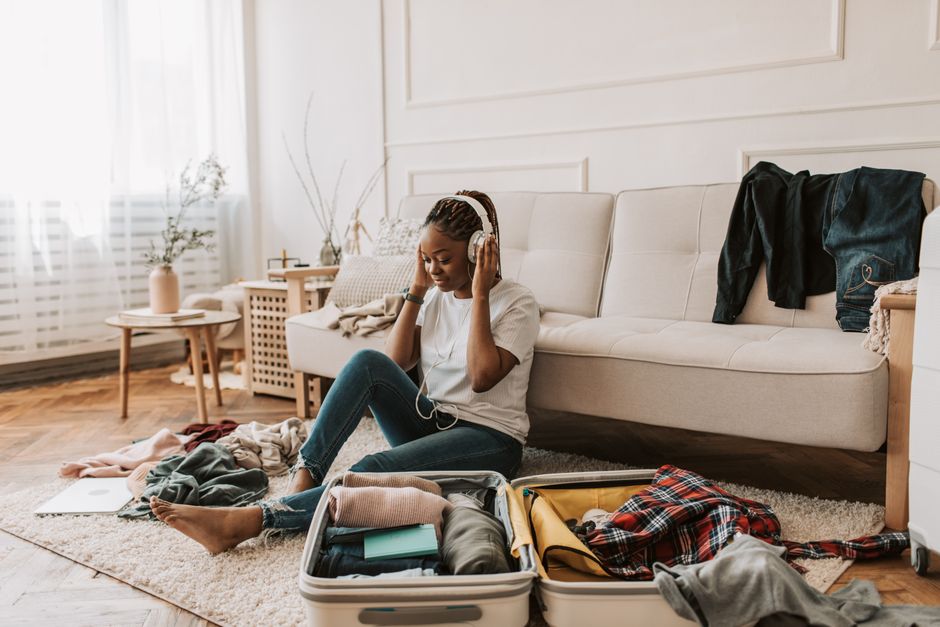
Measure the space available in your personal item. A bulky foam pillow can steal room from a sweater or water bottle. For a short flight, a pillow that compresses into a small bag is usually the smarter buy. For an overnight bus or long-haul flight, extra foam may earn its space. Do not buy a tall pillow simply because it looks supportive. If it pushes your head forward, it creates the same neck bend you were trying to avoid.
The best budget travel pillow under $25
My pick under $25 is the MLVOC Travel Pillow because it gives first-time buyers the most useful features at the lowest typical price. Its memory-foam shape, adjustable snap, washable cover, and compression bag make it practical for flights, trains, and overnight buses.
Why MLVOC wins the low-cost test
The MLVOC set commonly sells around $19.99 to $24.99 and usually includes a neck pillow, storage bag, eye mask, and earplugs. The pillow uses a curved memory-foam form rather than loose fiber fill, so it keeps its shape better when your head leans against it. The front snap helps hold the pillow in place, while the bag reduces its bulk in a carry-on. The cover can be removed for washing, which matters after a sweaty airport connection.
Where the cheap option falls short
MLVOC is not the best choice for every sleeper. Its standard shape can feel too tall for a shorter neck, and the foam takes more room than an inflatable model. The included eye mask and earplugs are useful extras, but they should not decide the purchase. For a traveler who hates heat or needs an especially compact bag, the MLVOC is only a good deal if the neck height feels right. My verdict: buy it for occasional trips and a strict budget, but test the fit before a long flight.
Budget travel pillow comparison by price and support
Prices change with sales, colors, and shipping, so use these figures as buying bands rather than permanent promises. The comparison shows why the cheapest pillow is not always the lowest-cost choice after one uncomfortable trip.
| Product | Typical listed price | Key design | Best use |
|---|---|---|---|
| MLVOC Travel Pillow | $19.99–$24.99 | Memory foam, snap, compression bag | Occasional flights on a tight budget |
| Samsonite Magic 2-in-1 | About $29.99 | Convertible neck and lumbar support | Road trips and buses |
| Cabeau Evolution S3 | About $39.99 on sale; $59.99 regular | Memory foam, raised sides, seat straps | Long flights and upright sleepers |
| BCOZZY Travel Pillow | About $49.97 | Double-sided neck and chin support | People whose heads fall forward |
| Trtl Travel Pillow | About $59.99 | Scarf-style wrap with internal support | Travelers who dislike bulky pillows |
The Cabeau Evolution S3 is the strongest value upgrade when its sale price is available. Its seat straps can reduce the forward slump, and its raised sides give more control than a basic U-shaped pillow. The Trtl costs more but packs flatter and feels less like wearing a foam ring. The BCOZZY gives the clearest chin support, while the Samsonite is the most flexible for travelers who also want lower-back support.
How to use a neck pillow on a flight
Buying the right shape is only half the job. Most travelers put the pillow on, lean back, and wonder why their neck still hurts. Use the pillow as part of a seating setup.
Step 1: Set your seat and shoulders first
Keep your hips against the seatback and place both feet on the floor or on a small bag. Lower the tray table if it helps you keep your elbows supported. Recline only after takeoff and ask the person behind you if the seat space is tight. A slight recline can reduce the forward fall, but a deep recline may push a tall pillow into your head. Keep your shoulders down. If the pillow forces your shoulders upward, loosen the front snap or choose a lower position.
Step 2: Fasten the pillow where your head falls
For the MLVOC or BCOZZY, place the front closure under your chin only if you need forward support; do not pull it tight enough to press your throat. For the Cabeau Evolution S3, attach the seat straps to the upper seat area and adjust them before you become sleepy. With the Trtl, wrap the support side under the jaw that tends to fall and keep the fabric smooth against your neck. Test each side for ten seconds, then choose the position that keeps your head level. Use a light scarf or clean cover if the fabric feels warm. The goal is stable support, not a tight grip.
Which budget pillows fail in real travel?

The most common failures come from buying for appearance, ignoring body shape, or packing a pillow that never leaves the suitcase. These questions expose the weak points before checkout.
Does a thick pillow always give more support?
No. A pillow that is too tall pushes your head forward and rounds your upper back. This is especially common with dense memory foam. If your chin touches your chest while sitting upright, the pillow is too high or placed too far behind your neck. Choose a lower shape, loosen the closure, or wear the pillow toward the front.
When should you skip a foam pillow?
Skip foam if you travel with a small under-seat bag, dislike heat, or need a pillow for several different people. An inflatable pillow can pack much smaller and lets you adjust the firmness. The trade-off is less stable support and the risk of a valve leak. Do not buy a foam model for a single trip if you will refuse to carry it after the flight.
Why do washable covers matter?
Airports, buses, and tray tables are high-contact environments. A pillow that cannot be cleaned can develop an odor quickly, especially when used against bare skin. Check that the cover zips off and that the care label allows machine washing. A removable cover is more useful than a free eye mask you may never use.
Which pillow should you buy for your trip?
For most budget travelers, buy the MLVOC Travel Pillow at about $19.99–$24.99. It covers the basic needs: neck shaping, a front snap, a washable cover, and a storage bag. It is the best first purchase for occasional flights when you want useful support without spending the price of a checked bag.
Pick the upgrade for long flights
Choose the Cabeau Evolution S3 when your journey lasts six hours or more and you often fall forward while sleeping. Its seat straps and raised side walls justify the extra cost, especially near its $39.99 sale price. Choose BCOZZY instead if chin support is your main problem and you prefer a soft wraparound shape. Choose Trtl if low packed bulk matters more than a traditional pillow feel. Each choice solves a different failure, but the Cabeau is the strongest all-round upgrade.
Pack the pillow you will actually use
Before departure, wear the pillow in a chair for 20 minutes, wash the cover, and place it where you can reach it without opening your main suitcase. A travel pillow only saves money when it helps you sleep, reduces next-day stiffness, and earns a place in future trips.
The most important takeaway: choose the lowest-priced pillow that keeps your head level in your actual seat without taking more packing space than you will carry.
