

Which carry-on backpack is actually worth buying for international travel? The answer changes depending on flying Ryanair through Europe or United across the Atlantic — and most reviews skip that part entirely.
Five bags hold up across real international travel. Here’s a clear-eyed breakdown of each one, including where each fails.
The Size Trap That Gets Travelers Gate-Checked
Budget airlines have turned carry-on size limits into a revenue strategy. Ryanair’s priority carry-on allowance is 55 x 40 x 20 cm. That 20 cm depth is the killer. Most 40L backpacks sit 22 to 28 cm deep. They won’t fit Ryanair’s metal sizer gauge without aggressive compression — and if they don’t fit, you pay €50 at the gate. Sometimes more.
US carriers are more forgiving. Delta, United, and American Airlines accept 22 x 14 x 9 inches (roughly 56 x 35 x 23 cm). They also enforce it inconsistently. Full flights during peak season? Gate agents look harder. Half-empty Tuesday morning departure? Nobody measures anything.
Liters vs. Dimensions — This Distinction Matters
A backpack’s liter rating measures internal volume. It tells you how much you can pack. It tells you nothing about whether the bag fits an overhead bin. A 45L backpack can be built tall-and-narrow or short-and-deep. The Tortuga Setout 45L is engineered to fit most airline gauges at 55 x 35 x 22 cm. A random 45L bag from an off-brand retailer might run 60 cm tall and fail a Ryanair sizer every time.
Always verify the actual dimensions before buying. Liter count is a packing guide. Centimeters determine whether you pay a gate fee.
The Weight Math Most Buyers Ignore
Many airlines cap carry-on weight at 7 to 10 kg. An empty 45L backpack already weighs 1.5 to 2.0 kg. Add a 15-inch laptop (1.5 kg), one week of clothes (2.5 kg), and chargers plus accessories (0.5 kg), and you’re at 5.5 to 6.5 kg before toiletries or snacks. On budget airlines with a 7 kg limit, that’s already tight. This is a real reason bags get checked at gates — not size, but weight. The 500-gram difference between the Nomatic (2.0 kg empty) and the Osprey Farpoint 40 (1.5 kg empty) matters more than most buyers realize until they’re standing at a gate scale.
Five Bags Compared: What the Specs Actually Show
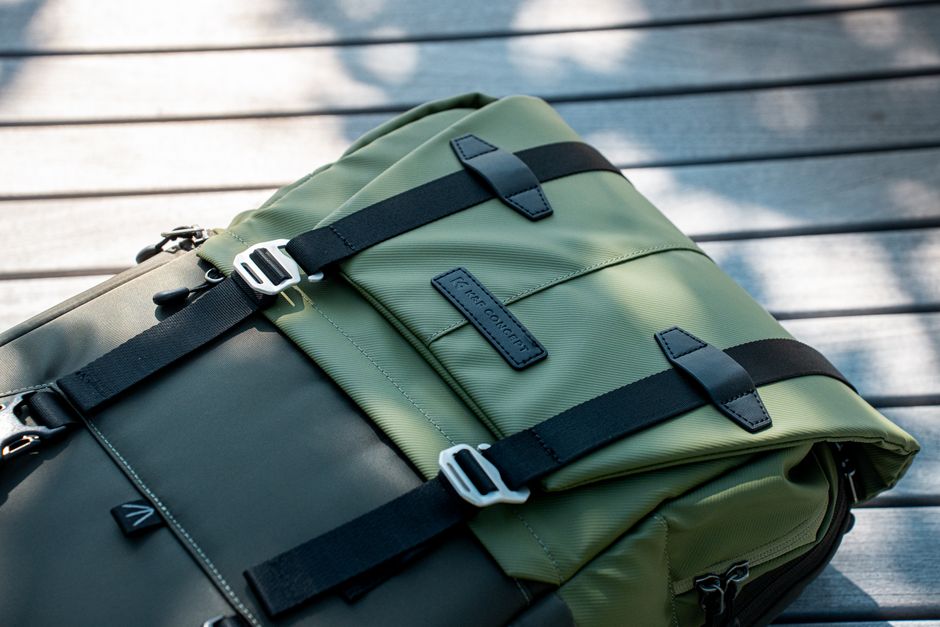
Five criteria matter when comparing carry-on backpacks: dimensions (not liters), empty weight, access style, internal organization, and build quality. Here’s where each bag lands:
| Backpack | Volume | Dimensions (cm) | Empty Weight | Price (USD) | Access Style |
|---|---|---|---|---|---|
| Osprey Farpoint 40 | 40L | 56 x 36 x 23 | 1.5 kg | ~$160 | Clamshell |
| Nomatic Travel Pack 40L | 40L (expandable) | 55 x 35 x 22 | 2.0 kg | ~$300 | Top-load + side zip |
| Tortuga Setout 45L | 45L | 55 x 35 x 22 | 1.6 kg | ~$199 | Clamshell |
| Tortuga Outbreaker 35L | 35L | 53 x 35 x 20 | 1.5 kg | ~$299 | Clamshell |
| Peak Design Travel Backpack 45L | 45L | 56 x 39 x 20 | 1.8 kg | ~$300 | Side zip panels |
The Tortuga Outbreaker 35L has the tightest dimensions on this list — the only bag here that comfortably passes Ryanair’s sizer without compression. The Nomatic’s 2.0 kg empty weight is its biggest practical liability. The Peak Design’s 39 cm width pushes the edge of several international carrier limits.
Osprey Farpoint 40 — The Sensible Default Pick
The Osprey Farpoint 40 is the most purchased carry-on travel backpack in its category for good reason. Not marketing. Practical design decisions that work for most travelers.
It opens like a suitcase. The full clamshell layout means you lay it flat and see everything at once — no digging through a top-loading tube to find the shirt you packed last. The harness system is padded enough for a two-hour airport walk. When you don’t need the straps, they zip into a hidden panel so overhead bins and baggage handlers don’t snag them. A separate back-panel laptop sleeve stays organized even when the main compartment is chaos.
Where the Farpoint 40 Fails
Main compartment organization is sparse. One large space, a few basic pockets. No external water bottle pocket — a baffling omission on a travel pack. No shoe compartment. No laundry separation. Minimalist packers using packing cubes won’t care. Travelers who want a dedicated slot for every item will find the Farpoint frustrating after the first trip.
The harness is stowable but not built for distance. If you’re walking more than 45 minutes under load, you’ll feel it. This is an airport-hotel-coworking-space bag, not a hiking pack.
Who Should Buy It
Anyone buying their first carry-on backpack, anyone doing a multi-city Europe trip on a sub-$200 budget, or anyone who just wants something proven that works without overcomplicating the decision. The Farpoint 40 is the right call when you don’t yet know what you want from a travel bag.
Nomatic 40L vs. Tortuga Setout 45L: Two Different Philosophies

The Nomatic Travel Pack 40L ($300) and the Tortuga Setout 45L ($199) target similar travelers but solve different problems.
Nomatic is built around finding things fast. Dedicated pockets for shoes, dirty laundry, laptop, tablet, pens, keys, passport, charging cables, and a water bottle with a magnetic closure that snaps open one-handed. The system works. If you’ve ever spent ten minutes in a dim hostel room digging for a USB-C cable, you understand why people pay a $140 premium for this level of structure.
Tortuga is built around fitting more. The Setout 45L prioritizes usable volume in the main compartment. The clamshell opening matches Osprey’s full-access layout. Waterproof zippers are standard. The base is reinforced. At $199, the build quality exceeds the Farpoint’s — it holds up better under regular abuse and checked-bag handling when you need to gate-check it.
The Nomatic’s Real-World Weight Problem
Empty, the Nomatic Travel Pack weighs 2.0 kg. Pack a 15-inch laptop (1.5 kg), one week of clothes (2.5 kg), and cables plus accessories (0.5 kg), and you’re at 6.5 kg before toiletries. Ryanair’s Priority carry-on weight limit is 10 kg — that’s fine. But some regional European carriers cap carry-ons at 8 kg. At that point, the Nomatic’s empty weight becomes a genuine constraint, not a theoretical one.
Clear Verdict
Nomatic wins for travelers who fly primarily US carriers or full-service international airlines and care more about organization than weight savings. Tortuga Setout 45L wins on per-dollar value, build quality, and weight-restricted route flexibility. For most international travelers making multiple stops across Europe, the Setout is the stronger pick.
Peak Design 45L: Right Bag, Wrong Traveler
The Peak Design Travel Backpack 45L ($300) is the best-engineered bag on this list — if you carry camera equipment. The side-zip panel system gives organized access to interior sections without unpacking, and the external design looks polished enough for a client meeting. Skip it if you don’t shoot. The camera-cube internal structure wastes usable space for clothes-only packing, and the 39 cm width pushes some international airline limits. The Tortuga Setout delivers better value by $100 for pure travel without a camera system.
Matching the Bag to the Trip

- Budget European routes (Ryanair, WizzAir, Wizz): Tortuga Outbreaker 35L — tightest dimensions, passes sizer gauges consistently
- Long-haul or US carrier travel: Tortuga Setout 45L — maximum capacity, best build quality for the price at $199
- First carry-on bag, under $200 budget: Osprey Farpoint 40 — proven design, works for most trip types without overthinking it
- Organization-first, primarily US or long-haul flights: Nomatic Travel Pack 40L — worth the $300 premium if fast item access matters more than weight
- Travel photography trips: Peak Design 45L — built for camera access, doubles as a functional travel pack
