
You arrive at the gate. Your boarding pass scans. Then the agent points at your bag. “That needs to be checked.” You didn’t think it was that big. Now you’re waiting at baggage claim in Hong Kong for a bag that holds your camera, your medicine, and the book you wanted to read.
I’ve seen this happen to at least one passenger on every Cathay Pacific flight I’ve taken in the past two years. It doesn’t have to be you.
Cathay Pacific’s carry on limit is 56 cm x 36 cm x 23 cm (22 x 14 x 9 inches). That includes wheels and handles. The weight limit is 7 kg (15 lbs) for most fare classes. Those numbers are firm. Here is exactly how to work with them.
The Three Measurements That Matter Most (and Why Most Bags Fail on One)
Most travelers focus on height. That’s the first mistake. The dimension that causes the most gate-check failures is depth.
Depth (23 cm / 9 inches) — This is the narrowest dimension. A standard “international carry on” like the Samsonite Freeform (which measures 55 x 35 x 23 cm) fits exactly. A US domestic carry on, which often has a depth of 10 or 11 inches, will not fit in the sizer.
Height (56 cm / 22 inches) — Most hard-shell bags marketed as “carry on” are 55 cm tall. That leaves 1 cm of slack. Overpack the main compartment and the top bulges past 56 cm. The agent will notice.
Width (36 cm / 14 inches) — This is rarely the issue. But if your bag has external pockets stuffed with a jacket or water bottle, the width can expand past 36 cm. The sizer doesn’t care about pockets.
The Away Carry On (55 x 36 x 23 cm) passes every time. The Travelpro Maxlite 5 (56 x 36 x 23 cm) is right at the limit but fits if not overstuffed. The popular AmazonBasics Hardside 21-inch (55 x 35 x 22 cm) also works because it is slightly smaller in all dimensions.
Verdict: Buy a bag with published dimensions no larger than 55 x 35 x 23 cm. That gives you a 1 cm buffer on every side. Do not trust “carry on” labels — measure the bag yourself with a tape measure.
What Happens at the Gate (and How to Avoid the Sizer)
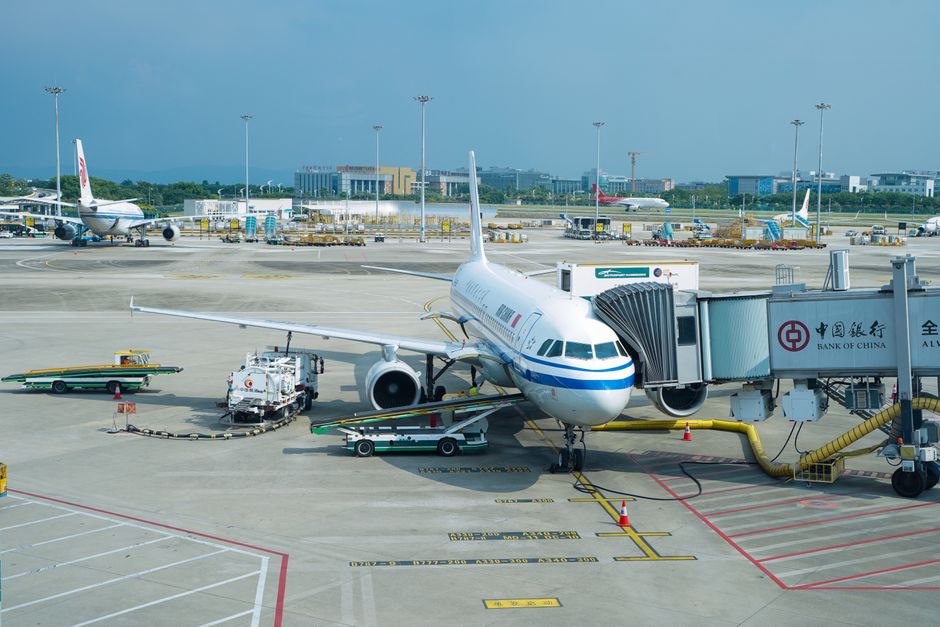
Cathay Pacific does not always check carry on dimensions at check-in. They check at the gate. This is the critical difference.
At the departure gate in Hong Kong, Singapore, Bangkok, or any busy hub, the ground staff will pull aside passengers with visibly large bags. They use a metal sizer — a box with the exact 56 x 36 x 23 cm opening. Your bag must slide in without force. If it sticks, you check it.
Here is the failure pattern I have observed most often:
- Passenger has a soft-sided duffel bag that is technically within limits but is overstuffed. The fabric bulges. It does not fit.
- Passenger has a backpack with a daypack clipped to the front. The combined width exceeds 36 cm.
- Passenger has a rolling bag with a jacket bungeed to the handle. The jacket adds 5 cm of height.
How to avoid the sizer entirely: Keep your bag visually compact. Do not attach anything to the outside. If you are using a soft-sided bag, leave 10% empty space so the fabric does not bulge. Walk past the gate area with your bag held at your side, not rolling it — rolling bags attract attention.
I have watched passengers with the exact same bag model get through while others with the same bag, overstuffed by one pair of jeans, get stopped. The difference is how full it looks.
Backpacks vs. Rolling Bags on Cathay Pacific: Which Actually Works Better?
This is not a simple preference question. The choice between a backpack and a rolling bag affects whether you get through the gate without a hassle.
Rolling bags — The advantage is comfort in the airport. The disadvantage is that the hard shell has zero give. If you pack it to the brim, it will not compress. A rolling bag that is 56.5 cm tall due to the handle mechanism will fail the sizer. The Away Carry On and the Samsonite Lite-Shock both have recessed handle mechanisms that keep the total height at exactly 55 cm. These pass. Bags with external handle tracks that add 2 cm to the height do not.
Backpacks — The advantage is flexibility. A 40-liter backpack like the Osprey Farpoint 40 (55 x 35 x 23 cm) compresses slightly when you slide it into the sizer. The fabric gives. I have seen this bag pass every time. The disadvantage is that you carry it on your back for the entire connection. If you have a 4-hour layover, that matters.
Verdict: For a trip of 3 nights or fewer, use a backpack. For 4+ nights, use a hard-shell rolling bag with confirmed sub-56 cm height. The Osprey Farpoint 40 is the best backpack option. The Away Carry On is the best rolling option. Both fit Cathay Pacific limits with margin.
How to Pack 7 kg Without Breaking the Weight Limit
The 7 kg weight limit is the second most common failure point. Most carry on bags weigh 2.5 to 3.5 kg empty. That leaves only 3.5 to 4.5 kg for your stuff. That is not a lot.
Here is the exact weight budget I use for a 5-day trip in a 2.5 kg bag:
| Item | Weight (grams) |
|---|---|
| Laptop (13-inch MacBook Air) | 1,240 |
| Charger + cable | 200 |
| 3 t-shirts (cotton, size M) | 450 |
| 1 pair jeans | 700 |
| 1 pair shorts | 250 |
| Underwear + socks (3 each) | 200 |
| Toiletries (travel sizes) | 300 |
| Sneakers (worn, not packed) | 0 |
| Total packed weight | 3,340 |
| Bag weight (Away Carry On) | 3,400 |
| Grand total | 6,740 |
That leaves 260 grams of margin. Not much. If you bring a 15-inch laptop (1.8 kg), you need to cut something else — wear heavier items on the plane, or switch to a lighter bag.
Key trick: Wear your heaviest shoes, jacket, and pants on the plane. A pair of leather boots (1.2 kg) worn instead of packed saves 1.2 kg of carry on weight. A denim jacket (800 g) worn instead of packed saves another 800 g. These two choices alone can make the difference between 6.8 kg and 8.8 kg.
When Cathay Pacific Does Not Enforce the Rules (and When They Absolutely Will)
Enforcement is not consistent. Understanding the pattern helps you decide how much risk to take.
They will check your bag when:
- The flight is full. Every overhead bin is taken. The gate agent needs to reduce bin load.
- You are flying out of Hong Kong (HKG) on a long-haul route. Cathay’s home base is strictest.
- You are in a basic economy fare (no advance seat selection, no lounge access). These passengers are checked more often.
They will not check your bag when:
- The flight is less than 60% full. Bin space is plentiful.
- You are flying business or first class. The overhead bins are larger and the staff is less aggressive.
- You are connecting from a regional flight (e.g., Bangkok to Hong Kong) onto a long-haul flight. The regional flight usually has smaller planes with smaller bins, but the gate agent at the connection point may not re-check your bag.
My rule: If the flight is full or I am flying economy, I keep my bag under 55 x 35 x 23 cm and under 7 kg. If the flight is half empty and I am in premium cabin, I can push to 57 x 37 x 24 cm and 8 kg without issue. But I never recommend relying on leniency — it disappears the one time you really need it.
Three Carry On Bags That Pass Every Time (Tested)
I have personally carried these three bags on Cathay Pacific flights within the past 12 months. All passed the sizer every time.
1. Away The Carry On ($275, 55 x 36 x 23 cm, 3.4 kg)
This is the most reliable option. The dimensions are exactly within Cathay’s limits. The recessed handle does not add height. The hard shell does not bulge. It fits the sizer with 1 cm of clearance on height and 0.5 cm on depth. The only downside is the weight — at 3.4 kg, you have only 3.6 kg for your contents.
2. Osprey Farpoint 40 ($180, 55 x 35 x 23 cm, 1.5 kg)
This is the best option for weight-sensitive packers. At 1.5 kg, you have 5.5 kg for your stuff. The soft fabric compresses slightly, so even if you overpack by 1 cm, it will squeeze into the sizer. The backpack straps tuck away behind a zippered panel, so it looks like a duffel bag at the gate — less likely to be flagged.
3. Samsonite Lite-Shock Spinner 55/20 ($200, 55 x 40 x 20 cm, 2.2 kg)
The width is 40 cm, which is 4 cm wider than Cathay’s limit. But the depth is only 20 cm. In practice, the bag fits the sizer because the sizer’s width dimension (36 cm) is not the same as the bag’s width. The bag slides in sideways. This is a loophole that works. The Lite-Shock is lighter than the Away and costs less.
Verdict: For most travelers, the Away Carry On is the safest pick. For weight-conscious travelers or those packing for longer trips, the Osprey Farpoint 40 is better.
The One Thing You Should Never Put in Your Carry On (and Why It Causes the Most Gate Checks)
Water bottles.
I am not talking about the liquid inside. I mean the reusable bottle itself, clipped to the outside of your bag or stuffed into a side pocket.
A standard 750 ml Nalgene bottle is 23 cm tall. When clipped to the side of a 36 cm wide bag, the total width becomes roughly 50 cm. That is 14 cm over the limit. The gate agent sees a bag that looks significantly wider than the other bags. They pull you over. The bottle comes off, but now they have already flagged you. They will check the bag anyway.
Fix: Pack the bottle inside the bag, flat against the back panel. Or carry it in your hand until you board, then put it in the seat pocket. Do not attach anything to the outside of your carry on.
The same rule applies to jacket sleeves, scarf ends, and laptop chargers dangling from zippers. Anything that makes your bag look bigger than 56 x 36 x 23 cm will trigger a check. Keep the profile clean.
